Why ADHD can go unnoticed until adulthood
Why some ADHD'ers are diagnosed later in life and where to find support.
No items found.


Why some ADHD'ers are diagnosed later in life and where to find support.
For decades, ADHD had a remarkably specific public image: a cisgender white boy who couldn’t stay in his seat and disrupted the classroom. If you were quiet, did well at school, or kept your difficulties to yourself, ADHD may never have entered the conversation. Instead, you were dreamy, disorganized, overly sensitive, or not trying hard enough.
That picture is finally expanding, and more adults are recognizing themselves in descriptions that go beyond visible hyperactivity. Perhaps you’ve spent years losing track of time, relying on panic to meet deadlines or finding routine tasks inexplicably difficult, while an assortment of private systems kept your life looking functional. An ADHD diagnosis in adulthood can finally explain those contradictions, while raising a more difficult question: why did it take so long for anyone to notice?
There’s no official age at which an ADHD diagnosis becomes “late,” although the term generally refers to ADHD first recognized or diagnosed in adulthood. It isn’t the same as “late-onset ADHD,” which suggests that the condition itself began later and remains scientifically debated.
A late diagnosis doesn’t mean the ADHD is new; the explanation is. Experiences that once seemed unrelated may suddenly form a recognizable pattern, from unfinished homework and forgotten appointments to chronic overwhelm at work.
Late diagnosis rarely has one cause. ADHD may not have resembled the narrow stereotype, or the signs may have been interpreted as personality traits or poor effort. In other cases, enough structure existed to keep things moving, leaving the amount of effort involved largely invisible.
Recognition is also shaped by gender and race. Women and people assigned female at birth have historically been less likely to receive a childhood diagnosis, while racial bias can affect whether similar behavior leads to support or punishment. A similar pattern appears in Autism, where women and AFAB people are more likely to be missed when their traits don’t match traditional diagnostic stereotypes. Although research doesn’t always distinguish neatly between gender identity and sex assigned at birth, the broader problem is clear: our understanding of ADHD developed around a narrow group, leaving many women, trans and non-binary ADHD’ers outside the picture.
Physical hyperactivity is only one possible expression of ADHD, and it doesn’t always involve leaving your seat. Difficulties with executive functioning—including starting tasks, remembering instructions and organizing what comes next—may be easier to mistake for carelessness or poor effort.
In childhood, the signs might have included:
Gendered expectations influence which traits are noticed and how they’re interpreted. Children expected to be quiet and accommodating may learn to suppress restlessness or monitor how much they speak, while impulsivity may be dismissed as immaturity or being “too much.” By adulthood, years of adapting to those expectations can make ADHD harder to recognize, particularly in women and people assigned female at birth, without creating one universal presentation.
Some ADHD’ers learn to mask the traits that draw criticism, perhaps by staying quiet to avoid interrupting or building elaborate systems so nothing gets forgotten. The difficulties become harder for other people to see, but the invisible labor of appearing organized doesn’t disappear.
Good grades may conceal the effort further, particularly when an ADHD’er excels in interesting subjects but forgets routine homework or completes assignments in a last-minute panic. School provides timetables and external deadlines, while adults may recreate that structure through overpreparation or working late. Other people see somebody capable and organized; they don’t see the work required to keep it that way.

ADHD often coexists with anxiety, depression, Autism and sleep disorders, so an earlier diagnosis may have been accurate without explaining the whole picture. Someone might receive effective support for anxiety yet continue struggling with time, impulsivity, and follow-through because the ADHD remains unrecognized. In other cases, the anxiety or burnout may have developed partly through years of missed obligations, repeated criticism, and working beyond sustainable limits.
Often evaluation appointments are short and focused on the most immediate problem, leaving little room to trace a complicated pattern back through childhood. If anxiety or depression is the most visible difficulty, it may become the entire explanation rather than one part of it. That’s why exploring possible ADHD requires a fuller account of when the difficulties began, where they appear, and what remains unresolved even when another condition is being treated.
Undiagnosed ADHD may become more obvious when the structure that once supported you disappears, or life begins demanding more than your existing systems can handle. Leaving education, starting a demanding job, or becoming a parent can expose difficulties that were previously easier to contain, while years of relying on anxiety and last-minute adrenaline may eventually become impossible to sustain. For others, a child’s diagnosis or another adult’s account finally connects experiences that once seemed unrelated. Hormonal changes may also affect how manageable ADHD feels, although the research is still developing. The more relevant clue is whether the pattern stretches back through your life, appears in different settings and interferes with everyday functioning.
Almost everyone loses track of time, procrastinates or forgets things occasionally, so relating to an ADHD experience doesn’t necessarily mean you're an ADHD'er. The difference is usually the wider pattern: how long the difficulties have been present, how often they occur, and how much they interfere with your life. Look for recurring difficulties across childhood, work, relationships and daily routines rather than one highly relatable trait.
A professional assessment is the clearest way to determine whether you meet the diagnostic criteria and whether another condition could better explain your experience. Unfortunately, assessment can be expensive, inaccessible, or shaped by professionals who don’t understand adult ADHD beyond the usual stereotypes. In that context, self-diagnosis can be a valid way to make sense of your experience and find community, even though it can’t provide the certainty, treatment access, or formal accommodations that a diagnosis may offer.
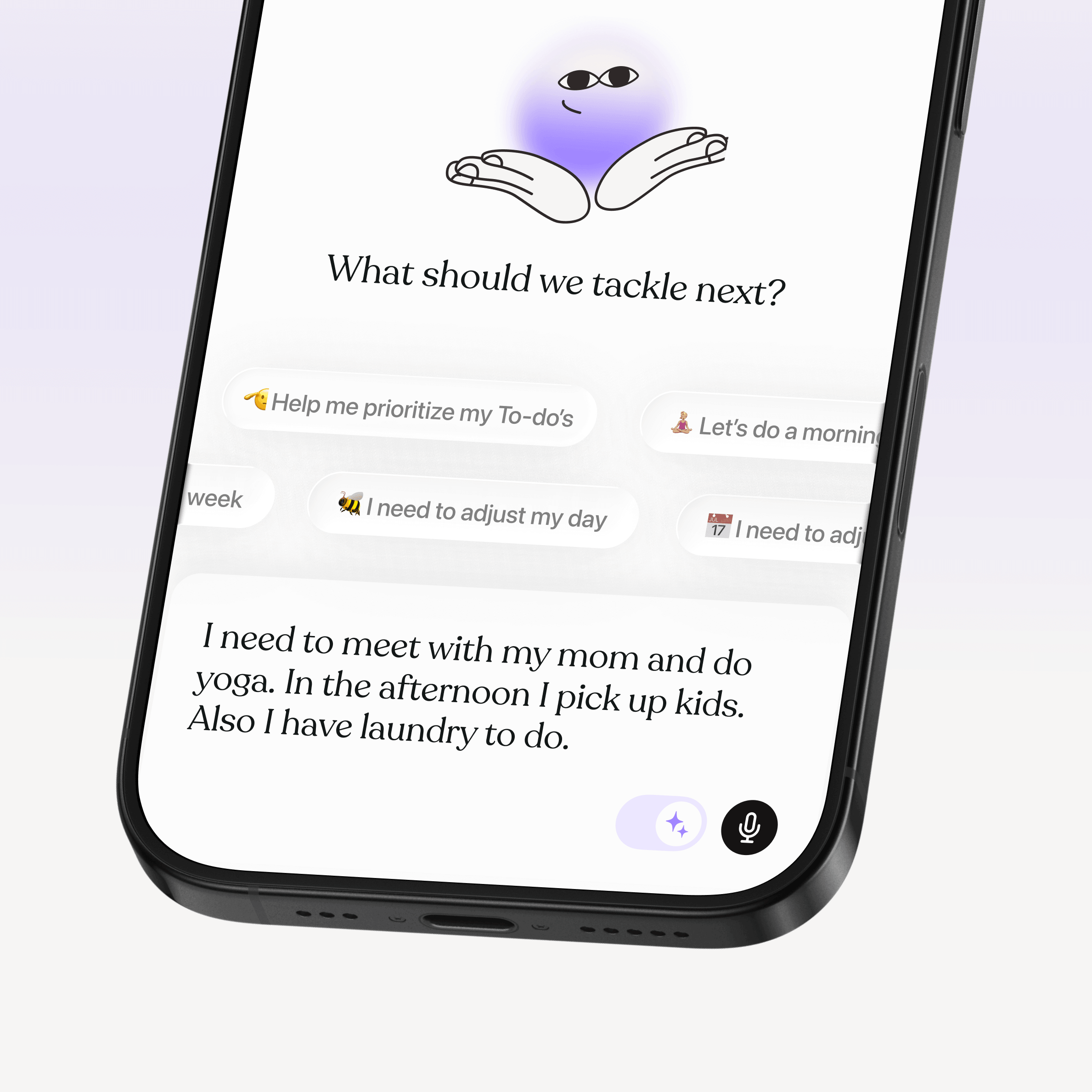
You don’t need to wait for a diagnosis before trying ADHD-friendly strategies. Visual reminders, body doubling, breaking tasks into smaller steps, and making time more visible can help whether you’re clinically diagnosed or self-diagnosed, or you eventually discover that another explanation fits better. Tiimo brings several of those supports together through visual planning, timers and flexible task breakdown, giving you somewhere to test what makes daily life easier.
A diagnosis may explain why staying organized, meeting deadlines, or maintaining routines has always required so much effort. That understanding can bring relief alongside grief for the support you missed or the years you spent blaming yourself. Give yourself time to process both without feeling that you need to arrive at a more positive conclusion immediately.
What comes next depends on your circumstances and may include medication, ADHD-informed therapy or coaching, peer support, and accommodations at work or in education. Practical tools can also provide external structure for planning, time and memory, but you don’t need to pursue every option at once. A diagnosis gives you a more accurate explanation for the difficulties, which makes it easier to choose support based on what you actually need.
Attoe, Darby E., and Emma A. Climie. “Miss. Diagnosis: A Systematic Review of ADHD in Adult Women.” Journal of Attention Disorders, vol. 27, no. 7, 2023, pp. 645–657.
Bergey, Meredith, et al. “Mapping Mental Health Inequalities: The Intersecting Effects of Gender, Race, Class, and Ethnicity on ADHD Diagnosis.” Sociology of Health & Illness, vol. 44, no. 3, 2022, pp. 604–623.
Cleveland Clinic. “ADHD in Women.” Cleveland Clinic, 15 Feb. 2023.
Holden, Eve, and Helena Kobayashi-Wood. “Adverse Experiences of Women with Undiagnosed ADHD and the Invaluable Role of Diagnosis.” Scientific Reports, vol. 15, 2025, article 20945.
National Institute of Mental Health. “Attention-Deficit/Hyperactivity Disorder (ADHD).” National Institute of Mental Health, Dec. 2024.
Osianlis, Elyssa, et al. “ADHD and Sex Hormones in Females: A Systematic Review.” Journal of Attention Disorders, vol. 29, no. 9, 2025, pp. 706–723.
Sgro, Gina, et al. Barriers to Attention-Deficit/Hyperactivity Disorder Diagnosis in Adults: Findings from a Qualitative Study. Mathematica, prepared for the Office of the Assistant Secretary for Planning and Evaluation, U.S. Department of Health and Human Services, 10 Jan. 2025.

Why some ADHD'ers are diagnosed later in life and where to find support.
For decades, ADHD had a remarkably specific public image: a cisgender white boy who couldn’t stay in his seat and disrupted the classroom. If you were quiet, did well at school, or kept your difficulties to yourself, ADHD may never have entered the conversation. Instead, you were dreamy, disorganized, overly sensitive, or not trying hard enough.
That picture is finally expanding, and more adults are recognizing themselves in descriptions that go beyond visible hyperactivity. Perhaps you’ve spent years losing track of time, relying on panic to meet deadlines or finding routine tasks inexplicably difficult, while an assortment of private systems kept your life looking functional. An ADHD diagnosis in adulthood can finally explain those contradictions, while raising a more difficult question: why did it take so long for anyone to notice?
There’s no official age at which an ADHD diagnosis becomes “late,” although the term generally refers to ADHD first recognized or diagnosed in adulthood. It isn’t the same as “late-onset ADHD,” which suggests that the condition itself began later and remains scientifically debated.
A late diagnosis doesn’t mean the ADHD is new; the explanation is. Experiences that once seemed unrelated may suddenly form a recognizable pattern, from unfinished homework and forgotten appointments to chronic overwhelm at work.
Late diagnosis rarely has one cause. ADHD may not have resembled the narrow stereotype, or the signs may have been interpreted as personality traits or poor effort. In other cases, enough structure existed to keep things moving, leaving the amount of effort involved largely invisible.
Recognition is also shaped by gender and race. Women and people assigned female at birth have historically been less likely to receive a childhood diagnosis, while racial bias can affect whether similar behavior leads to support or punishment. A similar pattern appears in Autism, where women and AFAB people are more likely to be missed when their traits don’t match traditional diagnostic stereotypes. Although research doesn’t always distinguish neatly between gender identity and sex assigned at birth, the broader problem is clear: our understanding of ADHD developed around a narrow group, leaving many women, trans and non-binary ADHD’ers outside the picture.
Physical hyperactivity is only one possible expression of ADHD, and it doesn’t always involve leaving your seat. Difficulties with executive functioning—including starting tasks, remembering instructions and organizing what comes next—may be easier to mistake for carelessness or poor effort.
In childhood, the signs might have included:
Gendered expectations influence which traits are noticed and how they’re interpreted. Children expected to be quiet and accommodating may learn to suppress restlessness or monitor how much they speak, while impulsivity may be dismissed as immaturity or being “too much.” By adulthood, years of adapting to those expectations can make ADHD harder to recognize, particularly in women and people assigned female at birth, without creating one universal presentation.
Some ADHD’ers learn to mask the traits that draw criticism, perhaps by staying quiet to avoid interrupting or building elaborate systems so nothing gets forgotten. The difficulties become harder for other people to see, but the invisible labor of appearing organized doesn’t disappear.
Good grades may conceal the effort further, particularly when an ADHD’er excels in interesting subjects but forgets routine homework or completes assignments in a last-minute panic. School provides timetables and external deadlines, while adults may recreate that structure through overpreparation or working late. Other people see somebody capable and organized; they don’t see the work required to keep it that way.
ADHD often coexists with anxiety, depression, Autism and sleep disorders, so an earlier diagnosis may have been accurate without explaining the whole picture. Someone might receive effective support for anxiety yet continue struggling with time, impulsivity, and follow-through because the ADHD remains unrecognized. In other cases, the anxiety or burnout may have developed partly through years of missed obligations, repeated criticism, and working beyond sustainable limits.
Often evaluation appointments are short and focused on the most immediate problem, leaving little room to trace a complicated pattern back through childhood. If anxiety or depression is the most visible difficulty, it may become the entire explanation rather than one part of it. That’s why exploring possible ADHD requires a fuller account of when the difficulties began, where they appear, and what remains unresolved even when another condition is being treated.
Undiagnosed ADHD may become more obvious when the structure that once supported you disappears, or life begins demanding more than your existing systems can handle. Leaving education, starting a demanding job, or becoming a parent can expose difficulties that were previously easier to contain, while years of relying on anxiety and last-minute adrenaline may eventually become impossible to sustain. For others, a child’s diagnosis or another adult’s account finally connects experiences that once seemed unrelated. Hormonal changes may also affect how manageable ADHD feels, although the research is still developing. The more relevant clue is whether the pattern stretches back through your life, appears in different settings and interferes with everyday functioning.
Almost everyone loses track of time, procrastinates or forgets things occasionally, so relating to an ADHD experience doesn’t necessarily mean you're an ADHD'er. The difference is usually the wider pattern: how long the difficulties have been present, how often they occur, and how much they interfere with your life. Look for recurring difficulties across childhood, work, relationships and daily routines rather than one highly relatable trait.
A professional assessment is the clearest way to determine whether you meet the diagnostic criteria and whether another condition could better explain your experience. Unfortunately, assessment can be expensive, inaccessible, or shaped by professionals who don’t understand adult ADHD beyond the usual stereotypes. In that context, self-diagnosis can be a valid way to make sense of your experience and find community, even though it can’t provide the certainty, treatment access, or formal accommodations that a diagnosis may offer.
You don’t need to wait for a diagnosis before trying ADHD-friendly strategies. Visual reminders, body doubling, breaking tasks into smaller steps, and making time more visible can help whether you’re clinically diagnosed or self-diagnosed, or you eventually discover that another explanation fits better. Tiimo brings several of those supports together through visual planning, timers and flexible task breakdown, giving you somewhere to test what makes daily life easier.
A diagnosis may explain why staying organized, meeting deadlines, or maintaining routines has always required so much effort. That understanding can bring relief alongside grief for the support you missed or the years you spent blaming yourself. Give yourself time to process both without feeling that you need to arrive at a more positive conclusion immediately.
What comes next depends on your circumstances and may include medication, ADHD-informed therapy or coaching, peer support, and accommodations at work or in education. Practical tools can also provide external structure for planning, time and memory, but you don’t need to pursue every option at once. A diagnosis gives you a more accurate explanation for the difficulties, which makes it easier to choose support based on what you actually need.
Attoe, Darby E., and Emma A. Climie. “Miss. Diagnosis: A Systematic Review of ADHD in Adult Women.” Journal of Attention Disorders, vol. 27, no. 7, 2023, pp. 645–657.
Bergey, Meredith, et al. “Mapping Mental Health Inequalities: The Intersecting Effects of Gender, Race, Class, and Ethnicity on ADHD Diagnosis.” Sociology of Health & Illness, vol. 44, no. 3, 2022, pp. 604–623.
Cleveland Clinic. “ADHD in Women.” Cleveland Clinic, 15 Feb. 2023.
Holden, Eve, and Helena Kobayashi-Wood. “Adverse Experiences of Women with Undiagnosed ADHD and the Invaluable Role of Diagnosis.” Scientific Reports, vol. 15, 2025, article 20945.
National Institute of Mental Health. “Attention-Deficit/Hyperactivity Disorder (ADHD).” National Institute of Mental Health, Dec. 2024.
Osianlis, Elyssa, et al. “ADHD and Sex Hormones in Females: A Systematic Review.” Journal of Attention Disorders, vol. 29, no. 9, 2025, pp. 706–723.
Sgro, Gina, et al. Barriers to Attention-Deficit/Hyperactivity Disorder Diagnosis in Adults: Findings from a Qualitative Study. Mathematica, prepared for the Office of the Assistant Secretary for Planning and Evaluation, U.S. Department of Health and Human Services, 10 Jan. 2025.
Why some ADHD'ers are diagnosed later in life and where to find support.


For decades, ADHD had a remarkably specific public image: a cisgender white boy who couldn’t stay in his seat and disrupted the classroom. If you were quiet, did well at school, or kept your difficulties to yourself, ADHD may never have entered the conversation. Instead, you were dreamy, disorganized, overly sensitive, or not trying hard enough.
That picture is finally expanding, and more adults are recognizing themselves in descriptions that go beyond visible hyperactivity. Perhaps you’ve spent years losing track of time, relying on panic to meet deadlines or finding routine tasks inexplicably difficult, while an assortment of private systems kept your life looking functional. An ADHD diagnosis in adulthood can finally explain those contradictions, while raising a more difficult question: why did it take so long for anyone to notice?
There’s no official age at which an ADHD diagnosis becomes “late,” although the term generally refers to ADHD first recognized or diagnosed in adulthood. It isn’t the same as “late-onset ADHD,” which suggests that the condition itself began later and remains scientifically debated.
A late diagnosis doesn’t mean the ADHD is new; the explanation is. Experiences that once seemed unrelated may suddenly form a recognizable pattern, from unfinished homework and forgotten appointments to chronic overwhelm at work.
Late diagnosis rarely has one cause. ADHD may not have resembled the narrow stereotype, or the signs may have been interpreted as personality traits or poor effort. In other cases, enough structure existed to keep things moving, leaving the amount of effort involved largely invisible.
Recognition is also shaped by gender and race. Women and people assigned female at birth have historically been less likely to receive a childhood diagnosis, while racial bias can affect whether similar behavior leads to support or punishment. A similar pattern appears in Autism, where women and AFAB people are more likely to be missed when their traits don’t match traditional diagnostic stereotypes. Although research doesn’t always distinguish neatly between gender identity and sex assigned at birth, the broader problem is clear: our understanding of ADHD developed around a narrow group, leaving many women, trans and non-binary ADHD’ers outside the picture.
Physical hyperactivity is only one possible expression of ADHD, and it doesn’t always involve leaving your seat. Difficulties with executive functioning—including starting tasks, remembering instructions and organizing what comes next—may be easier to mistake for carelessness or poor effort.
In childhood, the signs might have included:
Gendered expectations influence which traits are noticed and how they’re interpreted. Children expected to be quiet and accommodating may learn to suppress restlessness or monitor how much they speak, while impulsivity may be dismissed as immaturity or being “too much.” By adulthood, years of adapting to those expectations can make ADHD harder to recognize, particularly in women and people assigned female at birth, without creating one universal presentation.
Some ADHD’ers learn to mask the traits that draw criticism, perhaps by staying quiet to avoid interrupting or building elaborate systems so nothing gets forgotten. The difficulties become harder for other people to see, but the invisible labor of appearing organized doesn’t disappear.
Good grades may conceal the effort further, particularly when an ADHD’er excels in interesting subjects but forgets routine homework or completes assignments in a last-minute panic. School provides timetables and external deadlines, while adults may recreate that structure through overpreparation or working late. Other people see somebody capable and organized; they don’t see the work required to keep it that way.
ADHD often coexists with anxiety, depression, Autism and sleep disorders, so an earlier diagnosis may have been accurate without explaining the whole picture. Someone might receive effective support for anxiety yet continue struggling with time, impulsivity, and follow-through because the ADHD remains unrecognized. In other cases, the anxiety or burnout may have developed partly through years of missed obligations, repeated criticism, and working beyond sustainable limits.
Often evaluation appointments are short and focused on the most immediate problem, leaving little room to trace a complicated pattern back through childhood. If anxiety or depression is the most visible difficulty, it may become the entire explanation rather than one part of it. That’s why exploring possible ADHD requires a fuller account of when the difficulties began, where they appear, and what remains unresolved even when another condition is being treated.
Undiagnosed ADHD may become more obvious when the structure that once supported you disappears, or life begins demanding more than your existing systems can handle. Leaving education, starting a demanding job, or becoming a parent can expose difficulties that were previously easier to contain, while years of relying on anxiety and last-minute adrenaline may eventually become impossible to sustain. For others, a child’s diagnosis or another adult’s account finally connects experiences that once seemed unrelated. Hormonal changes may also affect how manageable ADHD feels, although the research is still developing. The more relevant clue is whether the pattern stretches back through your life, appears in different settings and interferes with everyday functioning.
Almost everyone loses track of time, procrastinates or forgets things occasionally, so relating to an ADHD experience doesn’t necessarily mean you're an ADHD'er. The difference is usually the wider pattern: how long the difficulties have been present, how often they occur, and how much they interfere with your life. Look for recurring difficulties across childhood, work, relationships and daily routines rather than one highly relatable trait.
A professional assessment is the clearest way to determine whether you meet the diagnostic criteria and whether another condition could better explain your experience. Unfortunately, assessment can be expensive, inaccessible, or shaped by professionals who don’t understand adult ADHD beyond the usual stereotypes. In that context, self-diagnosis can be a valid way to make sense of your experience and find community, even though it can’t provide the certainty, treatment access, or formal accommodations that a diagnosis may offer.
You don’t need to wait for a diagnosis before trying ADHD-friendly strategies. Visual reminders, body doubling, breaking tasks into smaller steps, and making time more visible can help whether you’re clinically diagnosed or self-diagnosed, or you eventually discover that another explanation fits better. Tiimo brings several of those supports together through visual planning, timers and flexible task breakdown, giving you somewhere to test what makes daily life easier.
A diagnosis may explain why staying organized, meeting deadlines, or maintaining routines has always required so much effort. That understanding can bring relief alongside grief for the support you missed or the years you spent blaming yourself. Give yourself time to process both without feeling that you need to arrive at a more positive conclusion immediately.
What comes next depends on your circumstances and may include medication, ADHD-informed therapy or coaching, peer support, and accommodations at work or in education. Practical tools can also provide external structure for planning, time and memory, but you don’t need to pursue every option at once. A diagnosis gives you a more accurate explanation for the difficulties, which makes it easier to choose support based on what you actually need.
Attoe, Darby E., and Emma A. Climie. “Miss. Diagnosis: A Systematic Review of ADHD in Adult Women.” Journal of Attention Disorders, vol. 27, no. 7, 2023, pp. 645–657.
Bergey, Meredith, et al. “Mapping Mental Health Inequalities: The Intersecting Effects of Gender, Race, Class, and Ethnicity on ADHD Diagnosis.” Sociology of Health & Illness, vol. 44, no. 3, 2022, pp. 604–623.
Cleveland Clinic. “ADHD in Women.” Cleveland Clinic, 15 Feb. 2023.
Holden, Eve, and Helena Kobayashi-Wood. “Adverse Experiences of Women with Undiagnosed ADHD and the Invaluable Role of Diagnosis.” Scientific Reports, vol. 15, 2025, article 20945.
National Institute of Mental Health. “Attention-Deficit/Hyperactivity Disorder (ADHD).” National Institute of Mental Health, Dec. 2024.
Osianlis, Elyssa, et al. “ADHD and Sex Hormones in Females: A Systematic Review.” Journal of Attention Disorders, vol. 29, no. 9, 2025, pp. 706–723.
Sgro, Gina, et al. Barriers to Attention-Deficit/Hyperactivity Disorder Diagnosis in Adults: Findings from a Qualitative Study. Mathematica, prepared for the Office of the Assistant Secretary for Planning and Evaluation, U.S. Department of Health and Human Services, 10 Jan. 2025.
When you're ready, try Tiimo and make structure a little easier.


Timers on subtasks make time visible for the smaller steps inside a task. Here’s what the feature does and how it gives you a clearer view as you go.

Siri integration, intelligent lists, snap to plans, and XL widgets. Here's everything Tiimo is bringing to iOS 27.
Five ADHD-friendly organization tips that reduce clutter and simplify cleaning.
