ADHD and sleep: why your brain won't switch off at night
ADHD brains are wired differently when it comes to sleep. Here's the science behind why it happens, and what you can do about it tonight.
No items found.

ADHD brains are wired differently when it comes to sleep. Here's the science behind why it happens, and what you can do about it tonight.
It's midnight. You have to be up at 7 AM, and you've been lying in bed for the past hour trying to fall asleep. You're tired — genuinely tired — but your brain has other ideas. It wants to replay an awkward conversation from three years ago. Remind you of the thing you forgot to do. Wonder what would happen if you quit your job and moved to Portugal. Plan an elaborate hypothetical holiday you will definitely not take.
You check your phone — just for a second, you tell yourself. An hour later, the screen is the only light in the room and you are, somehow, even more awake than you were before.
If this sounds familiar, you are not broken, and you are not bad at sleeping. You have ADHD, and sleep problems are one of its most overlooked symptoms.
Research suggests that up to 80% of people with ADHD experience significant sleep difficulties. These aren't just the result of bad habits or poor discipline — they're biological. The same neurological differences that affect attention, executive function, and emotional regulation also shape how the brain manages the transition from wakefulness to sleep.
One of the most well-documented issues is a condition called Delayed Sleep Phase Syndrome (DSPS), which affects a large proportion of people with ADHD. In a neurotypical brain, the hormone melatonin begins to rise in the early evening — usually around 8 or 9 PM — signalling the body that it is time to wind down. In ADHD brains, that melatonin surge is often delayed by 90 minutes to three hours. Your body clock is running behind, not because you chose to stay up late, but because your brain is genuinely not ready for sleep at the time the rest of the world expects you to be.
There is also a dopamine connection. Dopamine — the neurotransmitter most commonly associated with ADHD — has an inhibitory relationship with melatonin. When dopamine remains dysregulated in the evening, it can physically suppress melatonin production, keeping the brain in an alert, daytime-like state long after the sun has gone down. The result is that you feel wired when you want to feel tired, and you feel groggy when you need to feel awake.
Many people with ADHD notice something strange: they feel more switched on at 11 PM than they do at 11 AM. This is not a coincidence or a character flaw. It reflects the ADHD brain's circadian rhythm, which often features a peak in cognitive alertness late in the evening rather than during conventional working hours.
This evening alertness can feel genuinely productive. Ideas come more easily. Distractions feel more manageable. The world is quieter and there are fewer demands competing for your attention. But it comes at a cost. By staying up to work, create, or simply exist in the rare peace of a quiet house, you push your sleep window even later, which makes the next morning harder, which makes the afternoon more difficult to navigate, which makes the evening feel like the only time you really function — and the cycle repeats.
Researchers have started calling this "revenge bedtime procrastination" — the phenomenon of staying up late not because you are not tired, but because it feels like the only time that truly belongs to you. For people who spend the day trying to keep up, masking, managing, and adapting to environments that were not built for their brains, the quiet hours after midnight can feel like a genuine relief. Unfortunately, sleep debt is not something you can borrow from indefinitely.
Falling asleep is only part of the challenge. The quality of sleep can also be affected by ADHD. People with ADHD are more likely to experience restless sleep, more frequent waking throughout the night, and difficulty staying in deep, restorative sleep stages. Some research has connected ADHD with higher rates of restless leg syndrome and sleep-disordered breathing, both of which fragment sleep and reduce its restorative effects.
Then there is the morning. Because the ADHD circadian rhythm runs later, waking up at a conventional hour feels like being dragged out of sleep at 4 AM. This is sometimes described as sleep inertia — the groggy, disoriented feeling that can last for hours — but for ADHD brains, it tends to be more intense and last longer. The cortisol spike that is supposed to wake you up and get you moving is often blunted or delayed, which is why ADHD mornings can feel like wading through fog even after a reasonable number of hours in bed.
All of this has downstream effects on everything else. Poor sleep worsens executive function, emotional regulation, working memory, and attention — the very systems that ADHD already makes more difficult to access. Sleep deprivation and ADHD reinforce each other in a way that can feel impossible to interrupt.
Standard sleep advice — "just go to bed earlier," "limit screen time," "try to relax" — is not wrong, exactly, but it misses the point for ADHD brains. If you have been told to simply try harder at sleeping and found that it does not work, that is not a failure. It is a mismatch between generic advice and what your particular neurology actually needs.
Here is what the research, and a lot of lived experience, suggests works better.
Rather than fighting your delayed sleep phase by forcing an earlier bedtime, consider anchoring your rhythm with morning light. Using a 10,000-lux light therapy lamp for 20 to 30 minutes within an hour of waking up can help reset your circadian clock over time. This signals to your brain that the day has genuinely started, which makes the night-time melatonin rise happen slightly earlier. It takes a few weeks to show consistent results, but it is one of the most evidence-backed interventions for delayed sleep phase issues.
Low-dose melatonin — around 0.5mg to 1mg — taken three to four hours before your desired sleep time (not right before bed) can also help nudge the biological clock earlier. Higher doses are not necessarily more effective for this purpose, and can sometimes cause grogginess the following morning.
ADHD brains often struggle with transitions — the shift from one mode of activity to another. Going from fully awake and engaged to sleep is one of the biggest transitions in the day, and without a clear signal, the brain has no reason to start winding down.
Setting a "the day is over" alarm one hour before you need to be in bed can help. This is not a bedtime alarm — it is a transition alarm. When it goes off, the goal is to stop taking on new tasks, put work away, and start shifting toward lower-stimulation activities. What counts as low-stimulation is personal. For some people it is reading. For others it is a short walk, a hot shower, or listening to a podcast while folding laundry. The specific activity matters less than the consistency — the brain starts to learn that this sequence means sleep is coming.
One reason bedtime feels so hard for ADHD brains is that sleep feels like a dopamine cliff. The interesting, stimulating things you were doing stop, and you are left in a dark, quiet room with nothing to focus on but your own thoughts. For a brain that needs novelty and stimulation to stay regulated, this can feel genuinely unpleasant.
Creating a "low-stimulation dopamine menu" for the hour before bed can help bridge this gap. This means choosing activities that feel enjoyable and mildly engaging, but do not activate the brain in the same way a phone or a gripping TV show would. A physical book, a simple craft, a colouring page, a jigsaw puzzle, gentle stretching, or even a familiar, low-stakes audio drama can all serve this function. The goal is something that feels good enough to make the transition to bed feel less like deprivation.
A significant part of what keeps ADHD brains awake at night is the fear of forgetting. When there are tasks undone, thoughts unprocessed, and ideas unrecorded, the brain tries to hold on to all of them — which means it stays partially active, cycling through reminders like an alarm that will not switch off.
A simple brain dump before bed — writing down every open thought, task, worry, or idea in a notebook — can help the brain release its grip on these things. Once something is written down, the mental reminder can stop running. It does not need to be organised or actionable. It just needs to exist outside your head. Some people find that spending five minutes on a brief plan for the following morning works similarly: knowing what tomorrow looks like makes it easier to let today go.
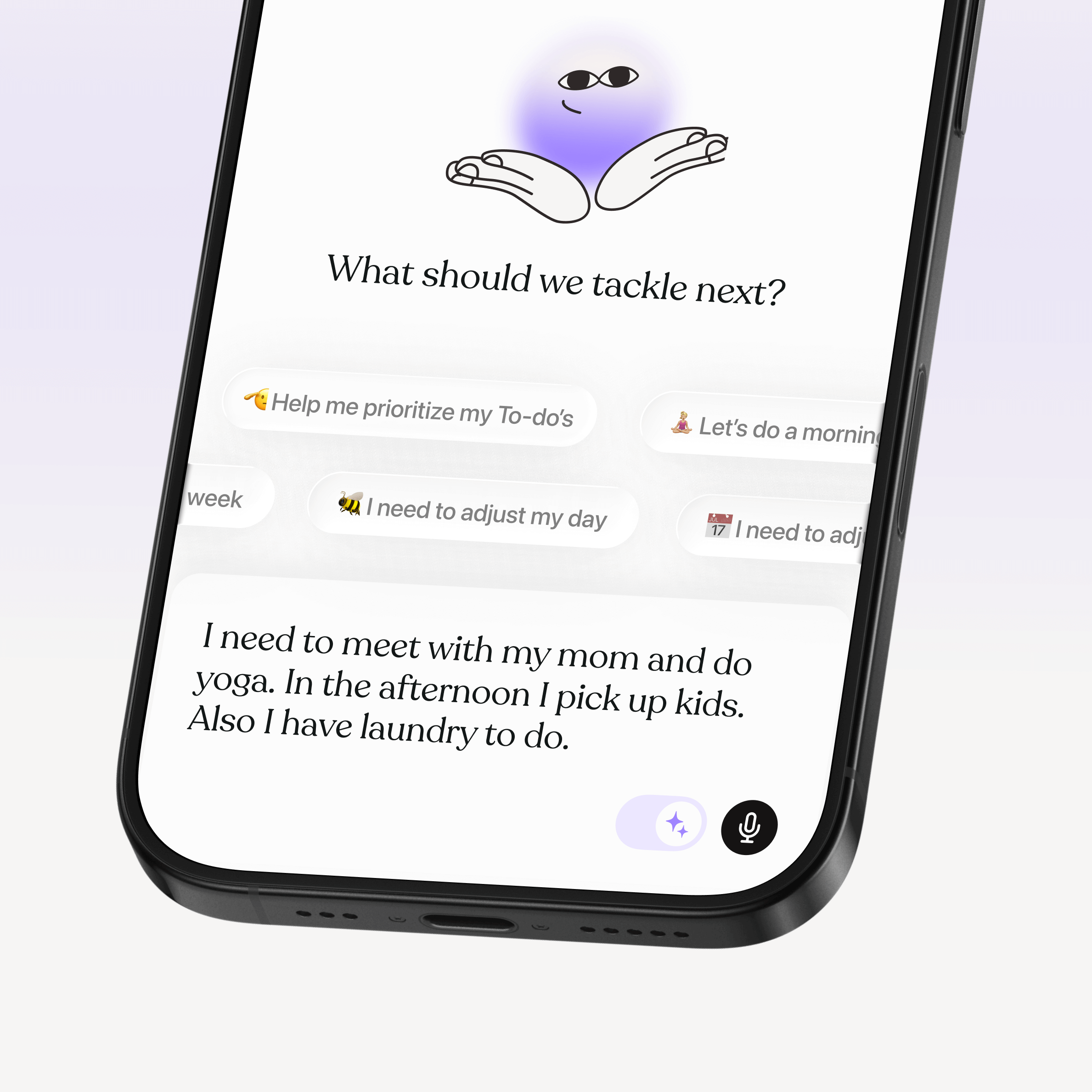
Planning tools like Tiimo can be useful here. Setting up tomorrow's schedule in the evening — even just the first two or three things you need to do — gives the ADHD brain a clear landing strip for the morning. Instead of waking up to a vague list of everything you have to figure out, you wake up to a concrete sequence. That difference, from ambiguity to structure, can make the morning feel significantly more manageable, which makes the night feel less anxious, which makes it easier to sleep.
If your sleep phase is genuinely delayed, waking up at 6 AM every day may not be a realistic goal in the short term, and forcing yourself to do it at the expense of sleep debt is likely to make everything else harder. Where possible, design your morning with the grogginess in mind. Give yourself a longer runway before anything demanding is expected of you. Make the first tasks of the day simple and low-stakes. Reduce the number of decisions required. Have things ready the night before so that Future You, who is running on minimal cognitive reserve, does not have to figure out where their keys are.
ADHD mornings are often the hardest part of the day. They do not have to be perfect. They just have to get you to the part of the day when your brain starts working.
It is worth saying clearly: ADHD sleep difficulties are not a character flaw or a failure of discipline. They are a neurological reality for a significant majority of people with ADHD, and they deserve to be taken seriously — by you, by your GP, and by anyone who has ever told you to "just get more sleep" as if it were a simple choice.
Addressing sleep is also not a luxury. It is foundational. Almost every other strategy for managing ADHD — planning your day, managing executive function, regulating your emotions, showing up for the things that matter to you — works better when your brain has had enough rest. Sleep is not a reward you earn when everything else is under control. It is part of the infrastructure that makes everything else possible.
If sleep has been a long-standing struggle, it may also be worth raising it with a doctor or psychiatrist, particularly if you think you might have a sleep disorder alongside your ADHD, or if medication timing is affecting your ability to wind down. You do not have to solve this alone.
In the meantime, be patient with yourself. You are not bad at sleeping. You have a brain that works differently, and it deserves strategies that actually match how it works.


ADHD brains are wired differently when it comes to sleep. Here's the science behind why it happens, and what you can do about it tonight.
It's midnight. You have to be up at 7 AM, and you've been lying in bed for the past hour trying to fall asleep. You're tired — genuinely tired — but your brain has other ideas. It wants to replay an awkward conversation from three years ago. Remind you of the thing you forgot to do. Wonder what would happen if you quit your job and moved to Portugal. Plan an elaborate hypothetical holiday you will definitely not take.
You check your phone — just for a second, you tell yourself. An hour later, the screen is the only light in the room and you are, somehow, even more awake than you were before.
If this sounds familiar, you are not broken, and you are not bad at sleeping. You have ADHD, and sleep problems are one of its most overlooked symptoms.
Research suggests that up to 80% of people with ADHD experience significant sleep difficulties. These aren't just the result of bad habits or poor discipline — they're biological. The same neurological differences that affect attention, executive function, and emotional regulation also shape how the brain manages the transition from wakefulness to sleep.
One of the most well-documented issues is a condition called Delayed Sleep Phase Syndrome (DSPS), which affects a large proportion of people with ADHD. In a neurotypical brain, the hormone melatonin begins to rise in the early evening — usually around 8 or 9 PM — signalling the body that it is time to wind down. In ADHD brains, that melatonin surge is often delayed by 90 minutes to three hours. Your body clock is running behind, not because you chose to stay up late, but because your brain is genuinely not ready for sleep at the time the rest of the world expects you to be.
There is also a dopamine connection. Dopamine — the neurotransmitter most commonly associated with ADHD — has an inhibitory relationship with melatonin. When dopamine remains dysregulated in the evening, it can physically suppress melatonin production, keeping the brain in an alert, daytime-like state long after the sun has gone down. The result is that you feel wired when you want to feel tired, and you feel groggy when you need to feel awake.
Many people with ADHD notice something strange: they feel more switched on at 11 PM than they do at 11 AM. This is not a coincidence or a character flaw. It reflects the ADHD brain's circadian rhythm, which often features a peak in cognitive alertness late in the evening rather than during conventional working hours.
This evening alertness can feel genuinely productive. Ideas come more easily. Distractions feel more manageable. The world is quieter and there are fewer demands competing for your attention. But it comes at a cost. By staying up to work, create, or simply exist in the rare peace of a quiet house, you push your sleep window even later, which makes the next morning harder, which makes the afternoon more difficult to navigate, which makes the evening feel like the only time you really function — and the cycle repeats.
Researchers have started calling this "revenge bedtime procrastination" — the phenomenon of staying up late not because you are not tired, but because it feels like the only time that truly belongs to you. For people who spend the day trying to keep up, masking, managing, and adapting to environments that were not built for their brains, the quiet hours after midnight can feel like a genuine relief. Unfortunately, sleep debt is not something you can borrow from indefinitely.
Falling asleep is only part of the challenge. The quality of sleep can also be affected by ADHD. People with ADHD are more likely to experience restless sleep, more frequent waking throughout the night, and difficulty staying in deep, restorative sleep stages. Some research has connected ADHD with higher rates of restless leg syndrome and sleep-disordered breathing, both of which fragment sleep and reduce its restorative effects.
Then there is the morning. Because the ADHD circadian rhythm runs later, waking up at a conventional hour feels like being dragged out of sleep at 4 AM. This is sometimes described as sleep inertia — the groggy, disoriented feeling that can last for hours — but for ADHD brains, it tends to be more intense and last longer. The cortisol spike that is supposed to wake you up and get you moving is often blunted or delayed, which is why ADHD mornings can feel like wading through fog even after a reasonable number of hours in bed.
All of this has downstream effects on everything else. Poor sleep worsens executive function, emotional regulation, working memory, and attention — the very systems that ADHD already makes more difficult to access. Sleep deprivation and ADHD reinforce each other in a way that can feel impossible to interrupt.
Standard sleep advice — "just go to bed earlier," "limit screen time," "try to relax" — is not wrong, exactly, but it misses the point for ADHD brains. If you have been told to simply try harder at sleeping and found that it does not work, that is not a failure. It is a mismatch between generic advice and what your particular neurology actually needs.
Here is what the research, and a lot of lived experience, suggests works better.
Rather than fighting your delayed sleep phase by forcing an earlier bedtime, consider anchoring your rhythm with morning light. Using a 10,000-lux light therapy lamp for 20 to 30 minutes within an hour of waking up can help reset your circadian clock over time. This signals to your brain that the day has genuinely started, which makes the night-time melatonin rise happen slightly earlier. It takes a few weeks to show consistent results, but it is one of the most evidence-backed interventions for delayed sleep phase issues.
Low-dose melatonin — around 0.5mg to 1mg — taken three to four hours before your desired sleep time (not right before bed) can also help nudge the biological clock earlier. Higher doses are not necessarily more effective for this purpose, and can sometimes cause grogginess the following morning.
ADHD brains often struggle with transitions — the shift from one mode of activity to another. Going from fully awake and engaged to sleep is one of the biggest transitions in the day, and without a clear signal, the brain has no reason to start winding down.
Setting a "the day is over" alarm one hour before you need to be in bed can help. This is not a bedtime alarm — it is a transition alarm. When it goes off, the goal is to stop taking on new tasks, put work away, and start shifting toward lower-stimulation activities. What counts as low-stimulation is personal. For some people it is reading. For others it is a short walk, a hot shower, or listening to a podcast while folding laundry. The specific activity matters less than the consistency — the brain starts to learn that this sequence means sleep is coming.
One reason bedtime feels so hard for ADHD brains is that sleep feels like a dopamine cliff. The interesting, stimulating things you were doing stop, and you are left in a dark, quiet room with nothing to focus on but your own thoughts. For a brain that needs novelty and stimulation to stay regulated, this can feel genuinely unpleasant.
Creating a "low-stimulation dopamine menu" for the hour before bed can help bridge this gap. This means choosing activities that feel enjoyable and mildly engaging, but do not activate the brain in the same way a phone or a gripping TV show would. A physical book, a simple craft, a colouring page, a jigsaw puzzle, gentle stretching, or even a familiar, low-stakes audio drama can all serve this function. The goal is something that feels good enough to make the transition to bed feel less like deprivation.
A significant part of what keeps ADHD brains awake at night is the fear of forgetting. When there are tasks undone, thoughts unprocessed, and ideas unrecorded, the brain tries to hold on to all of them — which means it stays partially active, cycling through reminders like an alarm that will not switch off.
A simple brain dump before bed — writing down every open thought, task, worry, or idea in a notebook — can help the brain release its grip on these things. Once something is written down, the mental reminder can stop running. It does not need to be organised or actionable. It just needs to exist outside your head. Some people find that spending five minutes on a brief plan for the following morning works similarly: knowing what tomorrow looks like makes it easier to let today go.
Planning tools like Tiimo can be useful here. Setting up tomorrow's schedule in the evening — even just the first two or three things you need to do — gives the ADHD brain a clear landing strip for the morning. Instead of waking up to a vague list of everything you have to figure out, you wake up to a concrete sequence. That difference, from ambiguity to structure, can make the morning feel significantly more manageable, which makes the night feel less anxious, which makes it easier to sleep.
If your sleep phase is genuinely delayed, waking up at 6 AM every day may not be a realistic goal in the short term, and forcing yourself to do it at the expense of sleep debt is likely to make everything else harder. Where possible, design your morning with the grogginess in mind. Give yourself a longer runway before anything demanding is expected of you. Make the first tasks of the day simple and low-stakes. Reduce the number of decisions required. Have things ready the night before so that Future You, who is running on minimal cognitive reserve, does not have to figure out where their keys are.
ADHD mornings are often the hardest part of the day. They do not have to be perfect. They just have to get you to the part of the day when your brain starts working.
It is worth saying clearly: ADHD sleep difficulties are not a character flaw or a failure of discipline. They are a neurological reality for a significant majority of people with ADHD, and they deserve to be taken seriously — by you, by your GP, and by anyone who has ever told you to "just get more sleep" as if it were a simple choice.
Addressing sleep is also not a luxury. It is foundational. Almost every other strategy for managing ADHD — planning your day, managing executive function, regulating your emotions, showing up for the things that matter to you — works better when your brain has had enough rest. Sleep is not a reward you earn when everything else is under control. It is part of the infrastructure that makes everything else possible.
If sleep has been a long-standing struggle, it may also be worth raising it with a doctor or psychiatrist, particularly if you think you might have a sleep disorder alongside your ADHD, or if medication timing is affecting your ability to wind down. You do not have to solve this alone.
In the meantime, be patient with yourself. You are not bad at sleeping. You have a brain that works differently, and it deserves strategies that actually match how it works.
ADHD brains are wired differently when it comes to sleep. Here's the science behind why it happens, and what you can do about it tonight.


It's midnight. You have to be up at 7 AM, and you've been lying in bed for the past hour trying to fall asleep. You're tired — genuinely tired — but your brain has other ideas. It wants to replay an awkward conversation from three years ago. Remind you of the thing you forgot to do. Wonder what would happen if you quit your job and moved to Portugal. Plan an elaborate hypothetical holiday you will definitely not take.
You check your phone — just for a second, you tell yourself. An hour later, the screen is the only light in the room and you are, somehow, even more awake than you were before.
If this sounds familiar, you are not broken, and you are not bad at sleeping. You have ADHD, and sleep problems are one of its most overlooked symptoms.
Research suggests that up to 80% of people with ADHD experience significant sleep difficulties. These aren't just the result of bad habits or poor discipline — they're biological. The same neurological differences that affect attention, executive function, and emotional regulation also shape how the brain manages the transition from wakefulness to sleep.
One of the most well-documented issues is a condition called Delayed Sleep Phase Syndrome (DSPS), which affects a large proportion of people with ADHD. In a neurotypical brain, the hormone melatonin begins to rise in the early evening — usually around 8 or 9 PM — signalling the body that it is time to wind down. In ADHD brains, that melatonin surge is often delayed by 90 minutes to three hours. Your body clock is running behind, not because you chose to stay up late, but because your brain is genuinely not ready for sleep at the time the rest of the world expects you to be.
There is also a dopamine connection. Dopamine — the neurotransmitter most commonly associated with ADHD — has an inhibitory relationship with melatonin. When dopamine remains dysregulated in the evening, it can physically suppress melatonin production, keeping the brain in an alert, daytime-like state long after the sun has gone down. The result is that you feel wired when you want to feel tired, and you feel groggy when you need to feel awake.
Many people with ADHD notice something strange: they feel more switched on at 11 PM than they do at 11 AM. This is not a coincidence or a character flaw. It reflects the ADHD brain's circadian rhythm, which often features a peak in cognitive alertness late in the evening rather than during conventional working hours.
This evening alertness can feel genuinely productive. Ideas come more easily. Distractions feel more manageable. The world is quieter and there are fewer demands competing for your attention. But it comes at a cost. By staying up to work, create, or simply exist in the rare peace of a quiet house, you push your sleep window even later, which makes the next morning harder, which makes the afternoon more difficult to navigate, which makes the evening feel like the only time you really function — and the cycle repeats.
Researchers have started calling this "revenge bedtime procrastination" — the phenomenon of staying up late not because you are not tired, but because it feels like the only time that truly belongs to you. For people who spend the day trying to keep up, masking, managing, and adapting to environments that were not built for their brains, the quiet hours after midnight can feel like a genuine relief. Unfortunately, sleep debt is not something you can borrow from indefinitely.
Falling asleep is only part of the challenge. The quality of sleep can also be affected by ADHD. People with ADHD are more likely to experience restless sleep, more frequent waking throughout the night, and difficulty staying in deep, restorative sleep stages. Some research has connected ADHD with higher rates of restless leg syndrome and sleep-disordered breathing, both of which fragment sleep and reduce its restorative effects.
Then there is the morning. Because the ADHD circadian rhythm runs later, waking up at a conventional hour feels like being dragged out of sleep at 4 AM. This is sometimes described as sleep inertia — the groggy, disoriented feeling that can last for hours — but for ADHD brains, it tends to be more intense and last longer. The cortisol spike that is supposed to wake you up and get you moving is often blunted or delayed, which is why ADHD mornings can feel like wading through fog even after a reasonable number of hours in bed.
All of this has downstream effects on everything else. Poor sleep worsens executive function, emotional regulation, working memory, and attention — the very systems that ADHD already makes more difficult to access. Sleep deprivation and ADHD reinforce each other in a way that can feel impossible to interrupt.
Standard sleep advice — "just go to bed earlier," "limit screen time," "try to relax" — is not wrong, exactly, but it misses the point for ADHD brains. If you have been told to simply try harder at sleeping and found that it does not work, that is not a failure. It is a mismatch between generic advice and what your particular neurology actually needs.
Here is what the research, and a lot of lived experience, suggests works better.
Rather than fighting your delayed sleep phase by forcing an earlier bedtime, consider anchoring your rhythm with morning light. Using a 10,000-lux light therapy lamp for 20 to 30 minutes within an hour of waking up can help reset your circadian clock over time. This signals to your brain that the day has genuinely started, which makes the night-time melatonin rise happen slightly earlier. It takes a few weeks to show consistent results, but it is one of the most evidence-backed interventions for delayed sleep phase issues.
Low-dose melatonin — around 0.5mg to 1mg — taken three to four hours before your desired sleep time (not right before bed) can also help nudge the biological clock earlier. Higher doses are not necessarily more effective for this purpose, and can sometimes cause grogginess the following morning.
ADHD brains often struggle with transitions — the shift from one mode of activity to another. Going from fully awake and engaged to sleep is one of the biggest transitions in the day, and without a clear signal, the brain has no reason to start winding down.
Setting a "the day is over" alarm one hour before you need to be in bed can help. This is not a bedtime alarm — it is a transition alarm. When it goes off, the goal is to stop taking on new tasks, put work away, and start shifting toward lower-stimulation activities. What counts as low-stimulation is personal. For some people it is reading. For others it is a short walk, a hot shower, or listening to a podcast while folding laundry. The specific activity matters less than the consistency — the brain starts to learn that this sequence means sleep is coming.
One reason bedtime feels so hard for ADHD brains is that sleep feels like a dopamine cliff. The interesting, stimulating things you were doing stop, and you are left in a dark, quiet room with nothing to focus on but your own thoughts. For a brain that needs novelty and stimulation to stay regulated, this can feel genuinely unpleasant.
Creating a "low-stimulation dopamine menu" for the hour before bed can help bridge this gap. This means choosing activities that feel enjoyable and mildly engaging, but do not activate the brain in the same way a phone or a gripping TV show would. A physical book, a simple craft, a colouring page, a jigsaw puzzle, gentle stretching, or even a familiar, low-stakes audio drama can all serve this function. The goal is something that feels good enough to make the transition to bed feel less like deprivation.
A significant part of what keeps ADHD brains awake at night is the fear of forgetting. When there are tasks undone, thoughts unprocessed, and ideas unrecorded, the brain tries to hold on to all of them — which means it stays partially active, cycling through reminders like an alarm that will not switch off.
A simple brain dump before bed — writing down every open thought, task, worry, or idea in a notebook — can help the brain release its grip on these things. Once something is written down, the mental reminder can stop running. It does not need to be organised or actionable. It just needs to exist outside your head. Some people find that spending five minutes on a brief plan for the following morning works similarly: knowing what tomorrow looks like makes it easier to let today go.
Planning tools like Tiimo can be useful here. Setting up tomorrow's schedule in the evening — even just the first two or three things you need to do — gives the ADHD brain a clear landing strip for the morning. Instead of waking up to a vague list of everything you have to figure out, you wake up to a concrete sequence. That difference, from ambiguity to structure, can make the morning feel significantly more manageable, which makes the night feel less anxious, which makes it easier to sleep.
If your sleep phase is genuinely delayed, waking up at 6 AM every day may not be a realistic goal in the short term, and forcing yourself to do it at the expense of sleep debt is likely to make everything else harder. Where possible, design your morning with the grogginess in mind. Give yourself a longer runway before anything demanding is expected of you. Make the first tasks of the day simple and low-stakes. Reduce the number of decisions required. Have things ready the night before so that Future You, who is running on minimal cognitive reserve, does not have to figure out where their keys are.
ADHD mornings are often the hardest part of the day. They do not have to be perfect. They just have to get you to the part of the day when your brain starts working.
It is worth saying clearly: ADHD sleep difficulties are not a character flaw or a failure of discipline. They are a neurological reality for a significant majority of people with ADHD, and they deserve to be taken seriously — by you, by your GP, and by anyone who has ever told you to "just get more sleep" as if it were a simple choice.
Addressing sleep is also not a luxury. It is foundational. Almost every other strategy for managing ADHD — planning your day, managing executive function, regulating your emotions, showing up for the things that matter to you — works better when your brain has had enough rest. Sleep is not a reward you earn when everything else is under control. It is part of the infrastructure that makes everything else possible.
If sleep has been a long-standing struggle, it may also be worth raising it with a doctor or psychiatrist, particularly if you think you might have a sleep disorder alongside your ADHD, or if medication timing is affecting your ability to wind down. You do not have to solve this alone.
In the meantime, be patient with yourself. You are not bad at sleeping. You have a brain that works differently, and it deserves strategies that actually match how it works.
When you're ready, try Tiimo and make structure a little easier.


ADHD decision fatigue can make even simple choices feel overwhelming. Here’s why it happens and how to reduce the mental load.

You waited, we made sure it was worth it! Discover what's new in the rebuilt Tiimo for Android and what's coming next.
Most productivity advice was never designed for how ADHD works. Here's why popular systems keep failing, and what actually works instead.
