What is a dopamine menu? The ADHD motivation tool people swear by
ADHD dopamine menus can make motivation feel easier by reducing friction and supporting your brain.
No items found.


ADHD dopamine menus can make motivation feel easier by reducing friction and supporting your brain.
A lot of productivity advice assumes that motivation and energy are relatively stable. You identify what matters, make a plan, and then your brain more or less follows along because the task feels important enough to deserve your attention. For ADHD’ers, though, that’s often not how motivation works at all.
You can care deeply about something, understand exactly why it matters, even want to do it, and still feel unable to bridge the gap between thinking about a task and actually starting it. Not because you’re lazy, irresponsible, or “bad at discipline,” but because ADHD’ers often regulate attention, reward, and activation differently from people whose brains respond more predictably to importance alone. A task being objectively important doesn’t necessarily mean your brain experiences it as accessible in the moment, especially when it feels repetitive, emotionally loaded, under- or over-stimulating, or too far away from any immediate sense of reward.
That disconnect sits at the center of a lot of ADHD experiences, and it’s also part of why dopamine menus have resonated so strongly with so many people lately. Not because they’re particularly revolutionary, necessarily, but because they finally give language to something a lot of ADHD’ers were already doing instinctively.
A dopamine menu is a personalized list of activities that help support focus, regulation, momentum, rest, or stimulation, depending on what your brain needs in a given moment. The structure is usually modeled after a restaurant menu, with different categories based on how much time, energy, or attention an activity requires.
What makes dopamine menus useful for ADHD’ers isn’t really the idea of “hacking dopamine” but that they reduce friction when your brain is least equipped to create structure for itself.
When your brain is already running on fumes, even figuring out what might help can start to feel like another decision you don’t have the energy to make. You end up looping through options without landing on any of them, and eventually reach for whatever source of stimulation is easiest and most immediate, simply because it asks the least of you.
A dopamine menu shortens that distance: instead of trying to invent support in the moment, you’ve already created a list of things your nervous system tends to respond well to, which means there’s less trial-and-error happening when your brain already feels stretched thin and a lot fewer chances of ending up forty-five minutes deep in Reddit threads about closet organization systems you absolutely did not need.
Dopamine plays a major role in motivation, reward, attention, and the anticipation of pleasure, which is part of why ADHD affects so much more than focus alone. Research suggests ADHD is associated with differences in dopamine regulation and reward processing, helping explain why some tasks can feel almost physically painful to start while others absorb attention so completely that hours disappear without notice.
It’s also why so much traditional productivity advice can feel so ineffective for ADHD’ers. Most systems assume motivation naturally follows importance, but ADHD motivation often responds more strongly to what ADHD researcher Dr. Russell Barkley describes through the INCUP framework:
That’s part of why someone can care deeply about a task and still struggle to begin, while a random side quest suddenly receives four uninterrupted hours of attention. Motivation for ADHD’ers often has less to do with whether something matters and more to do with whether the brain can actually access enough activation to get moving in the first place.
Most dopamine menus are divided into categories inspired by restaurant menus: starters, mains, sides, desserts, and specials.
Not every supportive activity requires the same amount of energy, and ADHD brains can get stuck when every option suddenly feels equally big, equally urgent, or equally impossible to choose between. Splitting things into smaller categories can make it easier to meet your brain where it actually is, rather than trying to force the same solution every time.
Starters are quick, low-effort activities that help your brain shift gears without demanding too much upfront energy. Think of them as little transition rituals for moments where you feel frozen, disconnected, or unable to start the next thing.
Examples:
The best starters are usually very small. If it requires too much setup, your brain probably won’t reach for it when you actually need it.
Mains are the activities that leave you feeling more restored, regulated, or connected to yourself afterward. They take more time and energy, but they also tend to refill the tank a bit more.
Examples:
A lot of ADHD’ers accidentally cut these things out first when life gets busy, even though they’re often the exact activities helping the nervous system stay afloat.
Sides are small forms of stimulation layered onto another task to help you stay engaged.
Examples:
Desserts are the activities that feel easy to reach for and are instantly satisfying in the moment. They can be comforting, regulating, funny, distracting, or just give your brain a break from effort for a while.
Examples:
There’s nothing inherently bad about any of these. ADHD brains naturally look for accessible stimulation, especially when you’re stressed, depleted, or running low on energy. The idea isn’t to avoid them, but to notice when you’re heading there on autopilot so you have a chance to reach for something that leaves you feeling a little more restored, regulated, or cared for, too.
Specials are the bigger things that sit out on the horizon a bit. They usually take more planning, anticipation, time, or energy, but they also bring novelty, which many ADHD brains tend to respond strongly to.
Examples:
One of the nicest things about these is that the dopamine often doesn’t only happen during the thing itself. Sometimes it starts while planning it, talking about it, counting down to it, or remembering that it’s waiting for you later in the week.
A lot of ADHD’ers accidentally build support systems around the person they feel like they should be instead of the person they actually are. The result is often a list full of optimized routines, aspirational habits, and self-care ideas that sound great in theory but feel completely out of reach when you actually need them.
A dopamine menu works much better when it reflects your real interests, habits, and comforts. The more specific something is, the easier it becomes to access in the moment, because “relax” still asks your brain to figure out what that actually means, while “sit on the balcony with an iced coffee and no phone for ten minutes” already comes with instructions.
It also doesn’t have to make sense to anyone else. Your menu can, and dare I say should, look weird to someone else. If listening to screamer metal somehow gets you through the dishes, amazing, and if spending two hours building a detailed Dungeons & Dragons character for a campaign you may never actually play reliably resets your brain after a hard day, fabulous. If something helps you feel more grounded, more regulated, or just makes it easier to move toward the next thing, it deserves a place on the menu.
And don’t be surprised if the menu shifts over time, because something that once felt restorative might suddenly stop working, while something that used to feel like a small treat becomes one of your most reliable supports. ADHD brains change, life changes with them, and the goal was never to build a perfect menu but to create something that keeps reflecting the person you are.
The best dopamine menu in the world won’t help much if you forget it exists, so keep it somewhere visible and easy to reach. That might be a widget on your home screen, a note stuck to your mirror, a sticky note near your desk, or a routine saved in Tiimo.
It also helps to reduce as much friction as possible between you and the thing itself. If music helps you start chores, make the playlist ahead of time. If getting outside helps regulate your nervous system, keep your shoes and headphones within easy reach. If you know you’ll forget ideas later, write them down when they show up instead of trusting your brain to hold onto them.
The less effort it takes to reach for something supportive, the more likely your brain is to grab it before ending up three hours deep into reorganizing your spice cabinet instead of answering the one email you opened your laptop for in the first place.
The funny thing is that a lot of ADHD’ers have been building dopamine menus for years without realizing it. The comfort show, the hyper-specific playlist, the drink you always buy before errands, and the little rituals that somehow make starting easier or help you come back to yourself after a hard day were probably never random in the first place.
You don’t need to reinvent the wheel. A dopamine menu simply gives those things a place to live so that, instead of trying to figure out what you need when your brain already feels overloaded, you’ve already created a softer place to land and an easier path back to yourself.
American Psychiatric Association. “ADHD in Adults: 4 Things to Know.” Psychiatry.org, 2024, www.psychiatry.org/news-room/apa-blogs/adhd-in-adults.
Centers for Disease Control and Prevention. “What Is ADHD?” CDC, 2024, www.cdc.gov/adhd/about/index.html.
Faraone, Stephen V., et al. “The World Federation of ADHD International Consensus Statement: 208 Evidence-Based Conclusions about the Disorder.” Neuroscience & Biobehavioral Reviews, vol. 128, 2021, pp. 789–818. ScienceDirect, https://doi.org/10.1016/j.neubiorev.2021.01.022.
Metcalfe, K. B., et al. “Time-Perception Deficits in Attention-Deficit/Hyperactivity Disorder across the Lifespan: A Meta-Analysis.” Applied Neuropsychology: Child, 2024, https://doi.org/10.1080/87565641.2023.2293712.
Mette, Christian. “Time Perception in Adult ADHD: Findings from a Decade: A Review.” International Journal of Environmental Research and Public Health, vol. 20, no. 4, 2023, p. 3098. MDPI, https://doi.org/10.3390/ijerph20043098.

ADHD dopamine menus can make motivation feel easier by reducing friction and supporting your brain.
A lot of productivity advice assumes that motivation and energy are relatively stable. You identify what matters, make a plan, and then your brain more or less follows along because the task feels important enough to deserve your attention. For ADHD’ers, though, that’s often not how motivation works at all.
You can care deeply about something, understand exactly why it matters, even want to do it, and still feel unable to bridge the gap between thinking about a task and actually starting it. Not because you’re lazy, irresponsible, or “bad at discipline,” but because ADHD’ers often regulate attention, reward, and activation differently from people whose brains respond more predictably to importance alone. A task being objectively important doesn’t necessarily mean your brain experiences it as accessible in the moment, especially when it feels repetitive, emotionally loaded, under- or over-stimulating, or too far away from any immediate sense of reward.
That disconnect sits at the center of a lot of ADHD experiences, and it’s also part of why dopamine menus have resonated so strongly with so many people lately. Not because they’re particularly revolutionary, necessarily, but because they finally give language to something a lot of ADHD’ers were already doing instinctively.
A dopamine menu is a personalized list of activities that help support focus, regulation, momentum, rest, or stimulation, depending on what your brain needs in a given moment. The structure is usually modeled after a restaurant menu, with different categories based on how much time, energy, or attention an activity requires.
What makes dopamine menus useful for ADHD’ers isn’t really the idea of “hacking dopamine” but that they reduce friction when your brain is least equipped to create structure for itself.
When your brain is already running on fumes, even figuring out what might help can start to feel like another decision you don’t have the energy to make. You end up looping through options without landing on any of them, and eventually reach for whatever source of stimulation is easiest and most immediate, simply because it asks the least of you.
A dopamine menu shortens that distance: instead of trying to invent support in the moment, you’ve already created a list of things your nervous system tends to respond well to, which means there’s less trial-and-error happening when your brain already feels stretched thin and a lot fewer chances of ending up forty-five minutes deep in Reddit threads about closet organization systems you absolutely did not need.
Dopamine plays a major role in motivation, reward, attention, and the anticipation of pleasure, which is part of why ADHD affects so much more than focus alone. Research suggests ADHD is associated with differences in dopamine regulation and reward processing, helping explain why some tasks can feel almost physically painful to start while others absorb attention so completely that hours disappear without notice.
It’s also why so much traditional productivity advice can feel so ineffective for ADHD’ers. Most systems assume motivation naturally follows importance, but ADHD motivation often responds more strongly to what ADHD researcher Dr. Russell Barkley describes through the INCUP framework:
That’s part of why someone can care deeply about a task and still struggle to begin, while a random side quest suddenly receives four uninterrupted hours of attention. Motivation for ADHD’ers often has less to do with whether something matters and more to do with whether the brain can actually access enough activation to get moving in the first place.
Most dopamine menus are divided into categories inspired by restaurant menus: starters, mains, sides, desserts, and specials.
Not every supportive activity requires the same amount of energy, and ADHD brains can get stuck when every option suddenly feels equally big, equally urgent, or equally impossible to choose between. Splitting things into smaller categories can make it easier to meet your brain where it actually is, rather than trying to force the same solution every time.
Starters are quick, low-effort activities that help your brain shift gears without demanding too much upfront energy. Think of them as little transition rituals for moments where you feel frozen, disconnected, or unable to start the next thing.
Examples:
The best starters are usually very small. If it requires too much setup, your brain probably won’t reach for it when you actually need it.
Mains are the activities that leave you feeling more restored, regulated, or connected to yourself afterward. They take more time and energy, but they also tend to refill the tank a bit more.
Examples:
A lot of ADHD’ers accidentally cut these things out first when life gets busy, even though they’re often the exact activities helping the nervous system stay afloat.
Sides are small forms of stimulation layered onto another task to help you stay engaged.
Examples:
Desserts are the activities that feel easy to reach for and are instantly satisfying in the moment. They can be comforting, regulating, funny, distracting, or just give your brain a break from effort for a while.
Examples:
There’s nothing inherently bad about any of these. ADHD brains naturally look for accessible stimulation, especially when you’re stressed, depleted, or running low on energy. The idea isn’t to avoid them, but to notice when you’re heading there on autopilot so you have a chance to reach for something that leaves you feeling a little more restored, regulated, or cared for, too.
Specials are the bigger things that sit out on the horizon a bit. They usually take more planning, anticipation, time, or energy, but they also bring novelty, which many ADHD brains tend to respond strongly to.
Examples:
One of the nicest things about these is that the dopamine often doesn’t only happen during the thing itself. Sometimes it starts while planning it, talking about it, counting down to it, or remembering that it’s waiting for you later in the week.
A lot of ADHD’ers accidentally build support systems around the person they feel like they should be instead of the person they actually are. The result is often a list full of optimized routines, aspirational habits, and self-care ideas that sound great in theory but feel completely out of reach when you actually need them.
A dopamine menu works much better when it reflects your real interests, habits, and comforts. The more specific something is, the easier it becomes to access in the moment, because “relax” still asks your brain to figure out what that actually means, while “sit on the balcony with an iced coffee and no phone for ten minutes” already comes with instructions.
It also doesn’t have to make sense to anyone else. Your menu can, and dare I say should, look weird to someone else. If listening to screamer metal somehow gets you through the dishes, amazing, and if spending two hours building a detailed Dungeons & Dragons character for a campaign you may never actually play reliably resets your brain after a hard day, fabulous. If something helps you feel more grounded, more regulated, or just makes it easier to move toward the next thing, it deserves a place on the menu.
And don’t be surprised if the menu shifts over time, because something that once felt restorative might suddenly stop working, while something that used to feel like a small treat becomes one of your most reliable supports. ADHD brains change, life changes with them, and the goal was never to build a perfect menu but to create something that keeps reflecting the person you are.
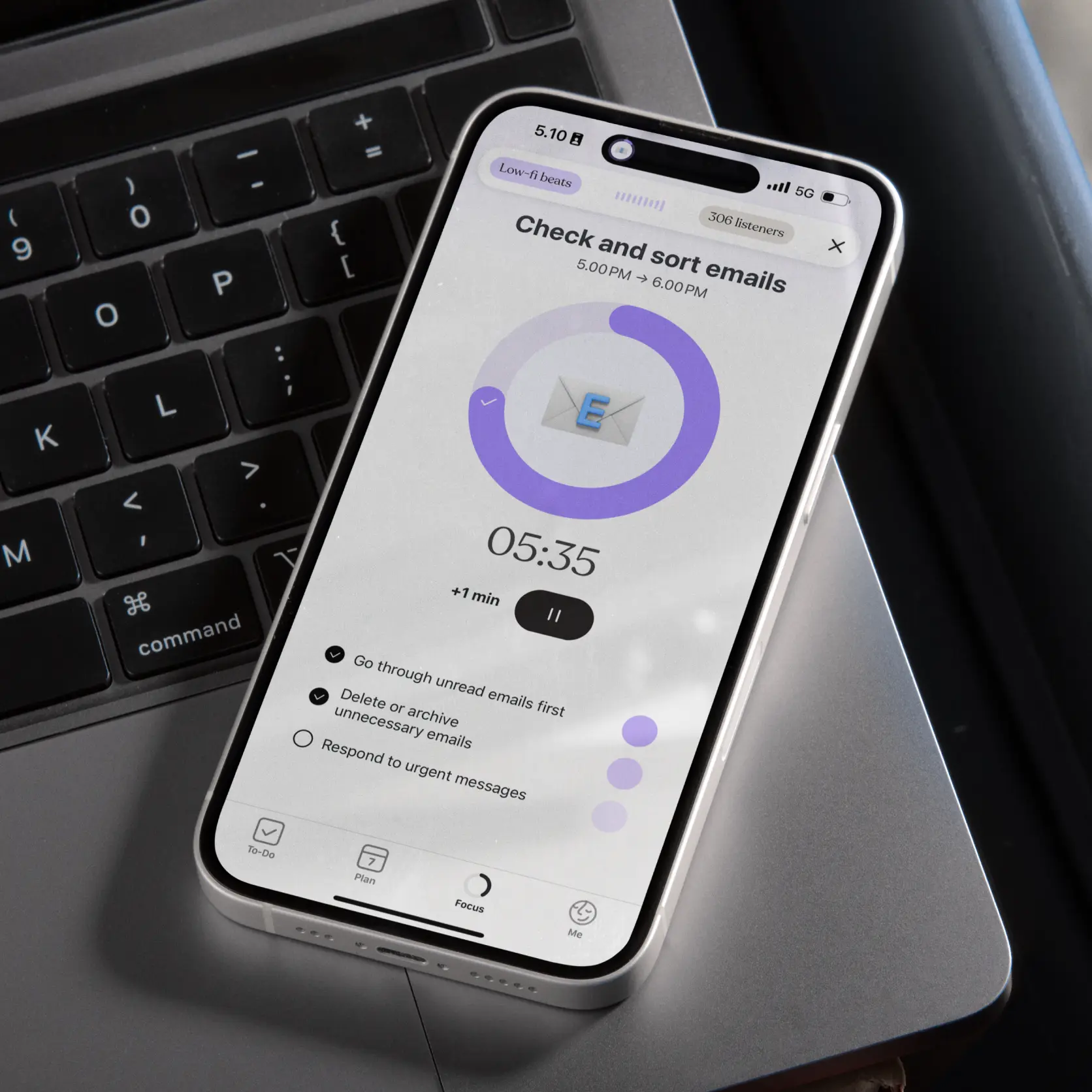
The best dopamine menu in the world won’t help much if you forget it exists, so keep it somewhere visible and easy to reach. That might be a widget on your home screen, a note stuck to your mirror, a sticky note near your desk, or a routine saved in Tiimo.
It also helps to reduce as much friction as possible between you and the thing itself. If music helps you start chores, make the playlist ahead of time. If getting outside helps regulate your nervous system, keep your shoes and headphones within easy reach. If you know you’ll forget ideas later, write them down when they show up instead of trusting your brain to hold onto them.
The less effort it takes to reach for something supportive, the more likely your brain is to grab it before ending up three hours deep into reorganizing your spice cabinet instead of answering the one email you opened your laptop for in the first place.
The funny thing is that a lot of ADHD’ers have been building dopamine menus for years without realizing it. The comfort show, the hyper-specific playlist, the drink you always buy before errands, and the little rituals that somehow make starting easier or help you come back to yourself after a hard day were probably never random in the first place.
You don’t need to reinvent the wheel. A dopamine menu simply gives those things a place to live so that, instead of trying to figure out what you need when your brain already feels overloaded, you’ve already created a softer place to land and an easier path back to yourself.
American Psychiatric Association. “ADHD in Adults: 4 Things to Know.” Psychiatry.org, 2024, www.psychiatry.org/news-room/apa-blogs/adhd-in-adults.
Centers for Disease Control and Prevention. “What Is ADHD?” CDC, 2024, www.cdc.gov/adhd/about/index.html.
Faraone, Stephen V., et al. “The World Federation of ADHD International Consensus Statement: 208 Evidence-Based Conclusions about the Disorder.” Neuroscience & Biobehavioral Reviews, vol. 128, 2021, pp. 789–818. ScienceDirect, https://doi.org/10.1016/j.neubiorev.2021.01.022.
Metcalfe, K. B., et al. “Time-Perception Deficits in Attention-Deficit/Hyperactivity Disorder across the Lifespan: A Meta-Analysis.” Applied Neuropsychology: Child, 2024, https://doi.org/10.1080/87565641.2023.2293712.
Mette, Christian. “Time Perception in Adult ADHD: Findings from a Decade: A Review.” International Journal of Environmental Research and Public Health, vol. 20, no. 4, 2023, p. 3098. MDPI, https://doi.org/10.3390/ijerph20043098.
ADHD dopamine menus can make motivation feel easier by reducing friction and supporting your brain.


A lot of productivity advice assumes that motivation and energy are relatively stable. You identify what matters, make a plan, and then your brain more or less follows along because the task feels important enough to deserve your attention. For ADHD’ers, though, that’s often not how motivation works at all.
You can care deeply about something, understand exactly why it matters, even want to do it, and still feel unable to bridge the gap between thinking about a task and actually starting it. Not because you’re lazy, irresponsible, or “bad at discipline,” but because ADHD’ers often regulate attention, reward, and activation differently from people whose brains respond more predictably to importance alone. A task being objectively important doesn’t necessarily mean your brain experiences it as accessible in the moment, especially when it feels repetitive, emotionally loaded, under- or over-stimulating, or too far away from any immediate sense of reward.
That disconnect sits at the center of a lot of ADHD experiences, and it’s also part of why dopamine menus have resonated so strongly with so many people lately. Not because they’re particularly revolutionary, necessarily, but because they finally give language to something a lot of ADHD’ers were already doing instinctively.
A dopamine menu is a personalized list of activities that help support focus, regulation, momentum, rest, or stimulation, depending on what your brain needs in a given moment. The structure is usually modeled after a restaurant menu, with different categories based on how much time, energy, or attention an activity requires.
What makes dopamine menus useful for ADHD’ers isn’t really the idea of “hacking dopamine” but that they reduce friction when your brain is least equipped to create structure for itself.
When your brain is already running on fumes, even figuring out what might help can start to feel like another decision you don’t have the energy to make. You end up looping through options without landing on any of them, and eventually reach for whatever source of stimulation is easiest and most immediate, simply because it asks the least of you.
A dopamine menu shortens that distance: instead of trying to invent support in the moment, you’ve already created a list of things your nervous system tends to respond well to, which means there’s less trial-and-error happening when your brain already feels stretched thin and a lot fewer chances of ending up forty-five minutes deep in Reddit threads about closet organization systems you absolutely did not need.
Dopamine plays a major role in motivation, reward, attention, and the anticipation of pleasure, which is part of why ADHD affects so much more than focus alone. Research suggests ADHD is associated with differences in dopamine regulation and reward processing, helping explain why some tasks can feel almost physically painful to start while others absorb attention so completely that hours disappear without notice.
It’s also why so much traditional productivity advice can feel so ineffective for ADHD’ers. Most systems assume motivation naturally follows importance, but ADHD motivation often responds more strongly to what ADHD researcher Dr. Russell Barkley describes through the INCUP framework:
That’s part of why someone can care deeply about a task and still struggle to begin, while a random side quest suddenly receives four uninterrupted hours of attention. Motivation for ADHD’ers often has less to do with whether something matters and more to do with whether the brain can actually access enough activation to get moving in the first place.
Most dopamine menus are divided into categories inspired by restaurant menus: starters, mains, sides, desserts, and specials.
Not every supportive activity requires the same amount of energy, and ADHD brains can get stuck when every option suddenly feels equally big, equally urgent, or equally impossible to choose between. Splitting things into smaller categories can make it easier to meet your brain where it actually is, rather than trying to force the same solution every time.
Starters are quick, low-effort activities that help your brain shift gears without demanding too much upfront energy. Think of them as little transition rituals for moments where you feel frozen, disconnected, or unable to start the next thing.
Examples:
The best starters are usually very small. If it requires too much setup, your brain probably won’t reach for it when you actually need it.
Mains are the activities that leave you feeling more restored, regulated, or connected to yourself afterward. They take more time and energy, but they also tend to refill the tank a bit more.
Examples:
A lot of ADHD’ers accidentally cut these things out first when life gets busy, even though they’re often the exact activities helping the nervous system stay afloat.
Sides are small forms of stimulation layered onto another task to help you stay engaged.
Examples:
Desserts are the activities that feel easy to reach for and are instantly satisfying in the moment. They can be comforting, regulating, funny, distracting, or just give your brain a break from effort for a while.
Examples:
There’s nothing inherently bad about any of these. ADHD brains naturally look for accessible stimulation, especially when you’re stressed, depleted, or running low on energy. The idea isn’t to avoid them, but to notice when you’re heading there on autopilot so you have a chance to reach for something that leaves you feeling a little more restored, regulated, or cared for, too.
Specials are the bigger things that sit out on the horizon a bit. They usually take more planning, anticipation, time, or energy, but they also bring novelty, which many ADHD brains tend to respond strongly to.
Examples:
One of the nicest things about these is that the dopamine often doesn’t only happen during the thing itself. Sometimes it starts while planning it, talking about it, counting down to it, or remembering that it’s waiting for you later in the week.
A lot of ADHD’ers accidentally build support systems around the person they feel like they should be instead of the person they actually are. The result is often a list full of optimized routines, aspirational habits, and self-care ideas that sound great in theory but feel completely out of reach when you actually need them.
A dopamine menu works much better when it reflects your real interests, habits, and comforts. The more specific something is, the easier it becomes to access in the moment, because “relax” still asks your brain to figure out what that actually means, while “sit on the balcony with an iced coffee and no phone for ten minutes” already comes with instructions.
It also doesn’t have to make sense to anyone else. Your menu can, and dare I say should, look weird to someone else. If listening to screamer metal somehow gets you through the dishes, amazing, and if spending two hours building a detailed Dungeons & Dragons character for a campaign you may never actually play reliably resets your brain after a hard day, fabulous. If something helps you feel more grounded, more regulated, or just makes it easier to move toward the next thing, it deserves a place on the menu.
And don’t be surprised if the menu shifts over time, because something that once felt restorative might suddenly stop working, while something that used to feel like a small treat becomes one of your most reliable supports. ADHD brains change, life changes with them, and the goal was never to build a perfect menu but to create something that keeps reflecting the person you are.
The best dopamine menu in the world won’t help much if you forget it exists, so keep it somewhere visible and easy to reach. That might be a widget on your home screen, a note stuck to your mirror, a sticky note near your desk, or a routine saved in Tiimo.
It also helps to reduce as much friction as possible between you and the thing itself. If music helps you start chores, make the playlist ahead of time. If getting outside helps regulate your nervous system, keep your shoes and headphones within easy reach. If you know you’ll forget ideas later, write them down when they show up instead of trusting your brain to hold onto them.
The less effort it takes to reach for something supportive, the more likely your brain is to grab it before ending up three hours deep into reorganizing your spice cabinet instead of answering the one email you opened your laptop for in the first place.
The funny thing is that a lot of ADHD’ers have been building dopamine menus for years without realizing it. The comfort show, the hyper-specific playlist, the drink you always buy before errands, and the little rituals that somehow make starting easier or help you come back to yourself after a hard day were probably never random in the first place.
You don’t need to reinvent the wheel. A dopamine menu simply gives those things a place to live so that, instead of trying to figure out what you need when your brain already feels overloaded, you’ve already created a softer place to land and an easier path back to yourself.
American Psychiatric Association. “ADHD in Adults: 4 Things to Know.” Psychiatry.org, 2024, www.psychiatry.org/news-room/apa-blogs/adhd-in-adults.
Centers for Disease Control and Prevention. “What Is ADHD?” CDC, 2024, www.cdc.gov/adhd/about/index.html.
Faraone, Stephen V., et al. “The World Federation of ADHD International Consensus Statement: 208 Evidence-Based Conclusions about the Disorder.” Neuroscience & Biobehavioral Reviews, vol. 128, 2021, pp. 789–818. ScienceDirect, https://doi.org/10.1016/j.neubiorev.2021.01.022.
Metcalfe, K. B., et al. “Time-Perception Deficits in Attention-Deficit/Hyperactivity Disorder across the Lifespan: A Meta-Analysis.” Applied Neuropsychology: Child, 2024, https://doi.org/10.1080/87565641.2023.2293712.
Mette, Christian. “Time Perception in Adult ADHD: Findings from a Decade: A Review.” International Journal of Environmental Research and Public Health, vol. 20, no. 4, 2023, p. 3098. MDPI, https://doi.org/10.3390/ijerph20043098.
When you're ready, try Tiimo and make structure a little easier.

Five ADHD-friendly organization tips that reduce clutter and simplify cleaning.
Why some ADHD'ers are diagnosed later in life and where to find support.
You’ve got plenty of energy, so why can’t you use it on the task that matters? Learn what blocks ADHD motivation and how to make difficult tasks easier to start.
