ADHD decision fatigue: why small choices exhaust you
ADHD decision fatigue can make even simple choices feel overwhelming. Here’s why it happens and how to reduce the mental load.
No items found.


ADHD decision fatigue can make even simple choices feel overwhelming. Here’s why it happens and how to reduce the mental load.
You open the fridge because you’re hungry. There’s leftover pasta, eggs, yogurt, a half-used bag of spinach, some cheese, maybe an apple that’s gone a little soft but technically still fine. You scan everything once, then again, waiting for one option to feel right.
But you’re stuck. Do you cook something warm or grab something quick? If you cook, do you actually have the energy for that right now? Will yogurt be enough, or will you end up hungry again in an hour? You reach for something, pause, put it back, and keep staring into the fridge like the answer might magically appear if you wait long enough.
Eventually, the fridge alarm starts beeping because the door’s been open too long. You close it, stand there for a second, then open it again anyway, somehow convinced you missed the perfect option the first time. At some point, you either settle for something unsatisfying or give up and decide to eat later. Except now you’re still hungry, slightly irritable, and somehow more drained than before you opened the fridge in the first place.
From the moment you wake up, your brain starts making decisions. Do you get out of bed now or scroll for ten more minutes? Which message actually needs a reply? What should you wear when none of your clothes feel right? What do you eat when nothing sounds good? Where do you even start when everything feels equally urgent?
Most of these choices seem small on their own, but they add up quickly. Some researchers estimate that adults make around 35,000 conscious and semi-conscious decisions every day, or more than 12 million decisions a year. Decision fatigue describes the mental strain that builds as those choices accumulate over time. In cognitive terms, decision-making relies heavily on executive functions like working memory, cognitive flexibility, and inhibitory control, which help you weigh options, prioritize, and move forward. ADHD directly affects these systems, which means the effort required to make decisions is often higher from the very beginning.
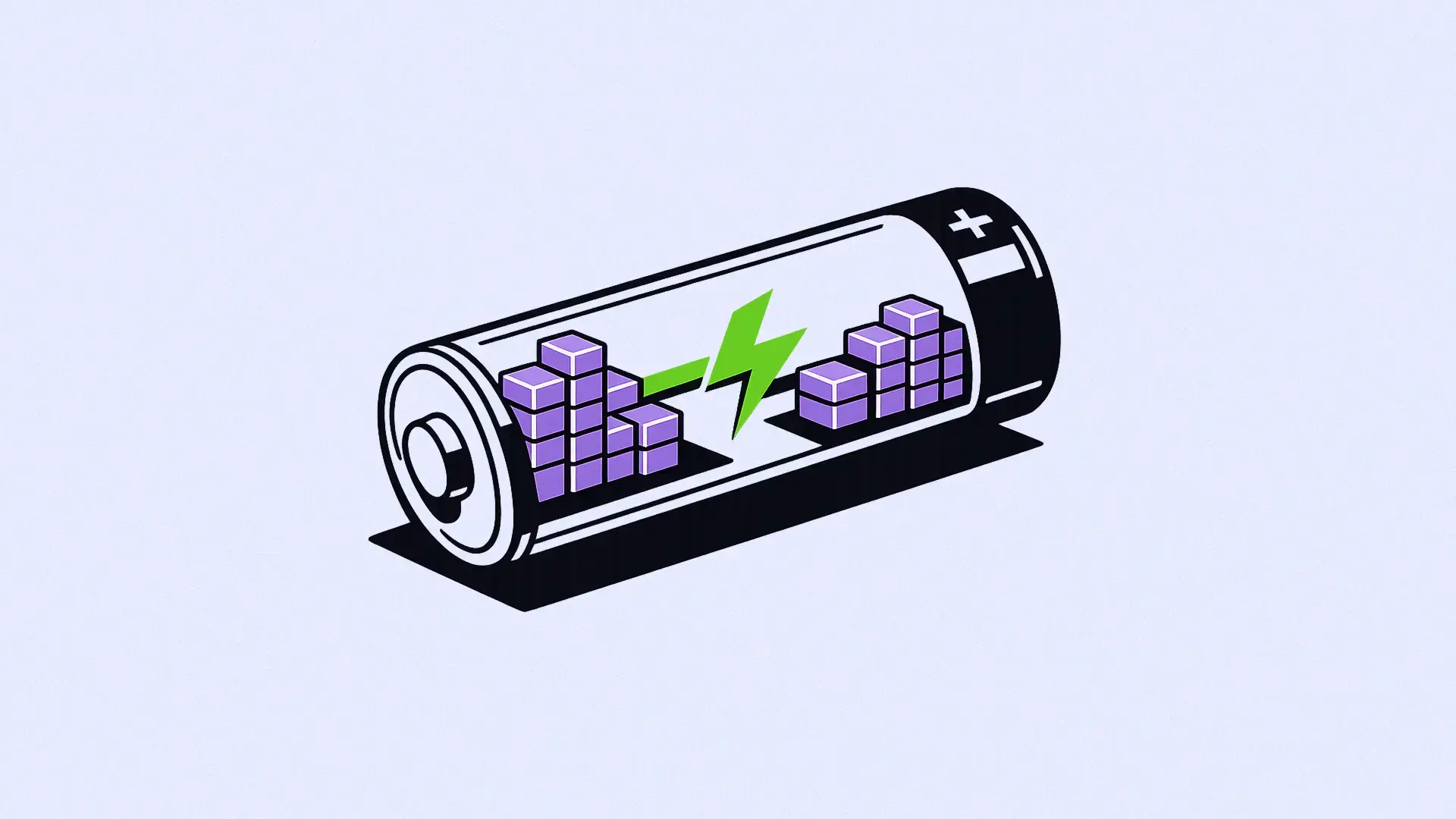
One way to think about it is like a phone battery. Every decision drains a little bit of energy, even the ones that seem insignificant. For people whose routines run mostly on autopilot, that drain may stay relatively low throughout the day. For ADHD’ers, though, many decisions require more conscious processing, which means the battery gets used faster and with less opportunity to recharge.
Cognitive load adds another layer. It refers to how much information and mental processing your brain is handling at a given moment. When that load stays manageable, decisions tend to feel straightforward. But when too many choices, responsibilities, or distractions pile up at once, the brain doesn’t become more efficient under pressure. It often slows down, loops through the same options repeatedly, or avoids the decision altogether. That’s why seemingly simple choices can suddenly feel disproportionately difficult, especially later in the day or during periods of stress.
Decision fatigue does not always stay contained to a difficult afternoon or a stressful week. When your brain spends long periods adapting to demands, switching tasks, masking, and trying to keep up without enough recovery, that strain can gradually build into ADHD burnout.
ADHD burnout often feels like your capacity suddenly shrinks. Things that once felt manageable start requiring disproportionate effort. You may struggle to answer messages, keep up with routines, make basic decisions, or start tasks you normally handle without much thought. Some people describe feeling emotionally flat, mentally foggy, unusually irritable, or disconnected from interests and responsibilities they care about.
Part of what makes this so difficult is that ADHD brains often operate with less margin for cognitive overload in the first place. When too much energy goes toward meeting everyday demands, there is less left for flexibility, recovery, or unexpected stress. Over time, even small decisions can begin to feel exhausting because the brain is no longer working from a rested baseline.
When burnout builds, adding more pressure or stricter systems usually backfires. What tends to help more is reducing friction wherever possible: simplifying routines, automating repetitive tasks, externalizing information, and giving your brain enough rest to regain some capacity instead of constantly pushing past its limits.
Decision fatigue builds quickly when your brain is constantly switching attention, tracking responsibilities, making choices, and adapting throughout the day. Small changes that reduce the number of active decisions your brain has to make can help preserve energy and make daily life feel more manageable.
Some choices become much harder once your brain is already tired or overloaded. Planning ahead during high-energy periods can reduce friction later. That might look like meal-prepping lunches for the week, choosing outfits the night before, creating a short list of easy dinners, or deciding which errands to run before the weekend starts.
It can also help to notice patterns in your energy levels. Tools like Tiimo's mood tracker can make it easier to spot when decision-making feels easier versus when your brain tends to feel depleted, so you can shift more demanding choices into times when you have greater capacity.
Too many choices can quickly become mentally exhausting. Creating smaller personal “menus” gives your brain fewer things to sort through each time a decision comes up. You might rotate between three breakfasts you know you enjoy, keep a short list of go-to meals for low-energy days, or create a small menu of focus playlists depending on your mood. Having a smaller set of reliable options reduces the amount of comparison and second-guessing your brain has to do while still leaving room for flexibility.
Decision fatigue often spikes during transitions, especially early in the morning when your brain is still waking up. A low dopamine morning routine can reduce the number of decisions your brain has to make right away by creating a calmer, more predictable start to the day.
That might include simple repeated actions like drinking water, opening the curtains, stretching, checking your schedule, or delaying notifications and social media until your brain has had time to fully come online.
Holding plans, reminders, and unfinished decisions in your head requires constant mental effort. Moving them into a visible system reduces the amount your brain has to actively track throughout the day.
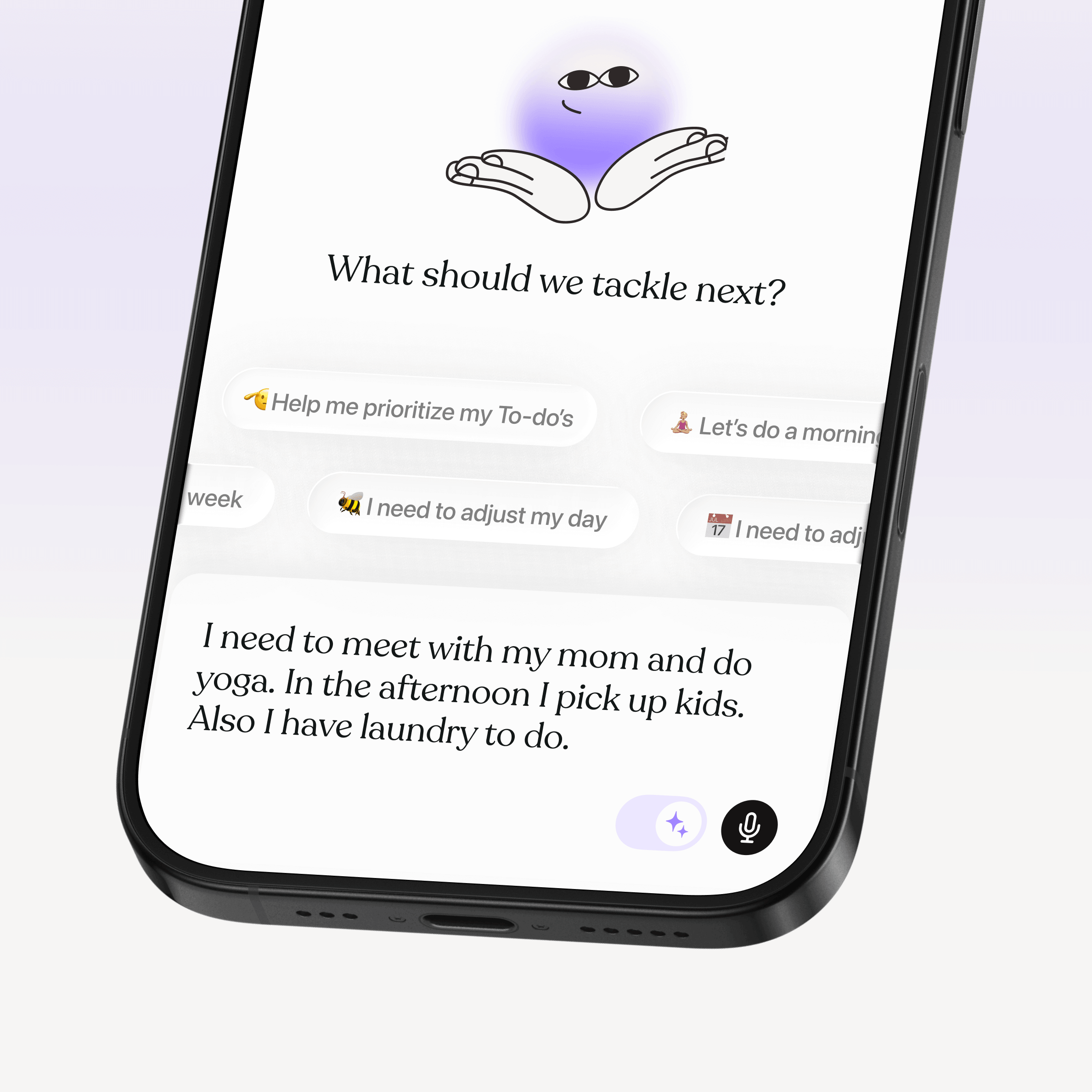
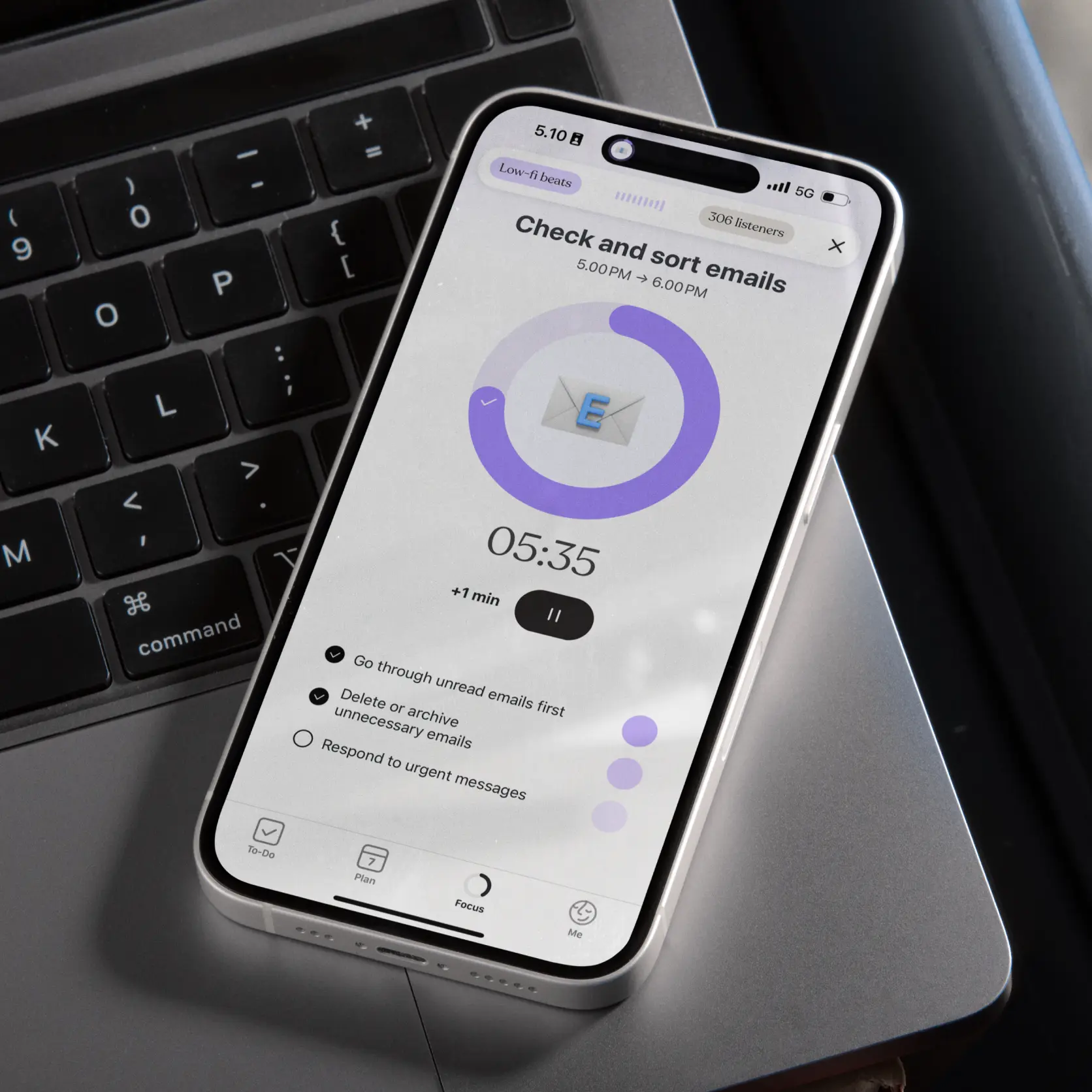
Tools like Tiimo can help turn a scattered braindump into structured tasks with clear steps and time estimates. When the plan already exists outside your head, it becomes easier to return to tasks without having to mentally rebuild everything from scratch each time.
When a task feels overwhelming, reducing the size of the first step can make it much easier to begin. Instead of trying to complete everything at once, focus on the smallest action that moves the task forward.
That might mean opening the document instead of writing the full report, putting away five dishes instead of cleaning the entire kitchen, or splitting a larger project across several shorter work sessions throughout the week. Smaller entry points reduce the mental effort required to get started and make tasks feel more approachable overall.
When your brain is constantly sorting, prioritizing, choosing, remembering, and adapting, it’s completely understandable for even small decisions to start feeling exhausting. The good news is that finding systems that work with your brain can make daily life feel much more manageable. Planning ahead during higher-energy periods, creating smaller menus of options, using routines to reduce transitions, and breaking tasks into smaller steps can all reduce the amount of mental effort your brain has to spend throughout the day.
It also helps to let go of the pressure to optimize every decision. If choosing what to eat feels overwhelming, eating the same safe meal you know you like is still taking care of yourself. If repeating the same morning routine helps your brain function, great! Leaning into what actually works for you often creates far more stability than forcing yourself to do things the “ideal” way.
American Psychiatric Association. “ADHD in Adults: 4 Things to Know.” Psychiatry.org, 2024, www.psychiatry.org/news-room/apa-blogs/adhd-in-adults.
Barkley, Russell A. “Executive Function Deficits in ADHD.” The ADHD Report, vol. 30, no. 2, 2022, pp. 1–9.
Centers for Disease Control and Prevention. “What Is ADHD?” CDC, 2024, www.cdc.gov/adhd/about/index.html.
Cleveland Clinic. “ADHD Burnout: Symptoms, Causes and Recovery.” Cleveland Clinic, 2025, my.clevelandclinic.org/health/articles/adhd-burnout.
Faraone, Stephen V., et al. “The World Federation of ADHD International Consensus Statement: 208 Evidence-Based Conclusions About the Disorder.” Neuroscience & Biobehavioral Reviews, vol. 128, 2021, pp. 789–818.
Harvard Health Publishing. “Decision Fatigue Can Wear You Down.” Harvard Medical School, 2024, www.health.harvard.edu/mind-and-mood/decision-fatigue-can-wear-you-down.
Nigg, Joel T. “Cognitive Control and ADHD.” Current Directions in Psychological Science, vol. 31, no. 6, 2022, pp. 522–28.
Sibley, Margaret H., et al. “Defining ADHD Symptom Persistence in Adulthood.” Journal of Clinical Psychiatry, vol. 83, no. 4, 2022.
World Health Organization. “Burn-out an ‘Occupational Phenomenon’: International Classification of Diseases.” WHO, 2022, www.who.int/news/item/28-05-2019-burn-out-an-occupational-phenomenon.

ADHD decision fatigue can make even simple choices feel overwhelming. Here’s why it happens and how to reduce the mental load.
You open the fridge because you’re hungry. There’s leftover pasta, eggs, yogurt, a half-used bag of spinach, some cheese, maybe an apple that’s gone a little soft but technically still fine. You scan everything once, then again, waiting for one option to feel right.
But you’re stuck. Do you cook something warm or grab something quick? If you cook, do you actually have the energy for that right now? Will yogurt be enough, or will you end up hungry again in an hour? You reach for something, pause, put it back, and keep staring into the fridge like the answer might magically appear if you wait long enough.
Eventually, the fridge alarm starts beeping because the door’s been open too long. You close it, stand there for a second, then open it again anyway, somehow convinced you missed the perfect option the first time. At some point, you either settle for something unsatisfying or give up and decide to eat later. Except now you’re still hungry, slightly irritable, and somehow more drained than before you opened the fridge in the first place.
From the moment you wake up, your brain starts making decisions. Do you get out of bed now or scroll for ten more minutes? Which message actually needs a reply? What should you wear when none of your clothes feel right? What do you eat when nothing sounds good? Where do you even start when everything feels equally urgent?
Most of these choices seem small on their own, but they add up quickly. Some researchers estimate that adults make around 35,000 conscious and semi-conscious decisions every day, or more than 12 million decisions a year. Decision fatigue describes the mental strain that builds as those choices accumulate over time. In cognitive terms, decision-making relies heavily on executive functions like working memory, cognitive flexibility, and inhibitory control, which help you weigh options, prioritize, and move forward. ADHD directly affects these systems, which means the effort required to make decisions is often higher from the very beginning.
One way to think about it is like a phone battery. Every decision drains a little bit of energy, even the ones that seem insignificant. For people whose routines run mostly on autopilot, that drain may stay relatively low throughout the day. For ADHD’ers, though, many decisions require more conscious processing, which means the battery gets used faster and with less opportunity to recharge.
Cognitive load adds another layer. It refers to how much information and mental processing your brain is handling at a given moment. When that load stays manageable, decisions tend to feel straightforward. But when too many choices, responsibilities, or distractions pile up at once, the brain doesn’t become more efficient under pressure. It often slows down, loops through the same options repeatedly, or avoids the decision altogether. That’s why seemingly simple choices can suddenly feel disproportionately difficult, especially later in the day or during periods of stress.
Decision fatigue does not always stay contained to a difficult afternoon or a stressful week. When your brain spends long periods adapting to demands, switching tasks, masking, and trying to keep up without enough recovery, that strain can gradually build into ADHD burnout.
ADHD burnout often feels like your capacity suddenly shrinks. Things that once felt manageable start requiring disproportionate effort. You may struggle to answer messages, keep up with routines, make basic decisions, or start tasks you normally handle without much thought. Some people describe feeling emotionally flat, mentally foggy, unusually irritable, or disconnected from interests and responsibilities they care about.
Part of what makes this so difficult is that ADHD brains often operate with less margin for cognitive overload in the first place. When too much energy goes toward meeting everyday demands, there is less left for flexibility, recovery, or unexpected stress. Over time, even small decisions can begin to feel exhausting because the brain is no longer working from a rested baseline.
When burnout builds, adding more pressure or stricter systems usually backfires. What tends to help more is reducing friction wherever possible: simplifying routines, automating repetitive tasks, externalizing information, and giving your brain enough rest to regain some capacity instead of constantly pushing past its limits.
Decision fatigue builds quickly when your brain is constantly switching attention, tracking responsibilities, making choices, and adapting throughout the day. Small changes that reduce the number of active decisions your brain has to make can help preserve energy and make daily life feel more manageable.
Some choices become much harder once your brain is already tired or overloaded. Planning ahead during high-energy periods can reduce friction later. That might look like meal-prepping lunches for the week, choosing outfits the night before, creating a short list of easy dinners, or deciding which errands to run before the weekend starts.
It can also help to notice patterns in your energy levels. Tools like Tiimo's mood tracker can make it easier to spot when decision-making feels easier versus when your brain tends to feel depleted, so you can shift more demanding choices into times when you have greater capacity.
Too many choices can quickly become mentally exhausting. Creating smaller personal “menus” gives your brain fewer things to sort through each time a decision comes up. You might rotate between three breakfasts you know you enjoy, keep a short list of go-to meals for low-energy days, or create a small menu of focus playlists depending on your mood. Having a smaller set of reliable options reduces the amount of comparison and second-guessing your brain has to do while still leaving room for flexibility.
Decision fatigue often spikes during transitions, especially early in the morning when your brain is still waking up. A low dopamine morning routine can reduce the number of decisions your brain has to make right away by creating a calmer, more predictable start to the day.
That might include simple repeated actions like drinking water, opening the curtains, stretching, checking your schedule, or delaying notifications and social media until your brain has had time to fully come online.
Holding plans, reminders, and unfinished decisions in your head requires constant mental effort. Moving them into a visible system reduces the amount your brain has to actively track throughout the day.
Tools like Tiimo can help turn a scattered braindump into structured tasks with clear steps and time estimates. When the plan already exists outside your head, it becomes easier to return to tasks without having to mentally rebuild everything from scratch each time.
When a task feels overwhelming, reducing the size of the first step can make it much easier to begin. Instead of trying to complete everything at once, focus on the smallest action that moves the task forward.
That might mean opening the document instead of writing the full report, putting away five dishes instead of cleaning the entire kitchen, or splitting a larger project across several shorter work sessions throughout the week. Smaller entry points reduce the mental effort required to get started and make tasks feel more approachable overall.
When your brain is constantly sorting, prioritizing, choosing, remembering, and adapting, it’s completely understandable for even small decisions to start feeling exhausting. The good news is that finding systems that work with your brain can make daily life feel much more manageable. Planning ahead during higher-energy periods, creating smaller menus of options, using routines to reduce transitions, and breaking tasks into smaller steps can all reduce the amount of mental effort your brain has to spend throughout the day.
It also helps to let go of the pressure to optimize every decision. If choosing what to eat feels overwhelming, eating the same safe meal you know you like is still taking care of yourself. If repeating the same morning routine helps your brain function, great! Leaning into what actually works for you often creates far more stability than forcing yourself to do things the “ideal” way.
American Psychiatric Association. “ADHD in Adults: 4 Things to Know.” Psychiatry.org, 2024, www.psychiatry.org/news-room/apa-blogs/adhd-in-adults.
Barkley, Russell A. “Executive Function Deficits in ADHD.” The ADHD Report, vol. 30, no. 2, 2022, pp. 1–9.
Centers for Disease Control and Prevention. “What Is ADHD?” CDC, 2024, www.cdc.gov/adhd/about/index.html.
Cleveland Clinic. “ADHD Burnout: Symptoms, Causes and Recovery.” Cleveland Clinic, 2025, my.clevelandclinic.org/health/articles/adhd-burnout.
Faraone, Stephen V., et al. “The World Federation of ADHD International Consensus Statement: 208 Evidence-Based Conclusions About the Disorder.” Neuroscience & Biobehavioral Reviews, vol. 128, 2021, pp. 789–818.
Harvard Health Publishing. “Decision Fatigue Can Wear You Down.” Harvard Medical School, 2024, www.health.harvard.edu/mind-and-mood/decision-fatigue-can-wear-you-down.
Nigg, Joel T. “Cognitive Control and ADHD.” Current Directions in Psychological Science, vol. 31, no. 6, 2022, pp. 522–28.
Sibley, Margaret H., et al. “Defining ADHD Symptom Persistence in Adulthood.” Journal of Clinical Psychiatry, vol. 83, no. 4, 2022.
World Health Organization. “Burn-out an ‘Occupational Phenomenon’: International Classification of Diseases.” WHO, 2022, www.who.int/news/item/28-05-2019-burn-out-an-occupational-phenomenon.
ADHD decision fatigue can make even simple choices feel overwhelming. Here’s why it happens and how to reduce the mental load.


You open the fridge because you’re hungry. There’s leftover pasta, eggs, yogurt, a half-used bag of spinach, some cheese, maybe an apple that’s gone a little soft but technically still fine. You scan everything once, then again, waiting for one option to feel right.
But you’re stuck. Do you cook something warm or grab something quick? If you cook, do you actually have the energy for that right now? Will yogurt be enough, or will you end up hungry again in an hour? You reach for something, pause, put it back, and keep staring into the fridge like the answer might magically appear if you wait long enough.
Eventually, the fridge alarm starts beeping because the door’s been open too long. You close it, stand there for a second, then open it again anyway, somehow convinced you missed the perfect option the first time. At some point, you either settle for something unsatisfying or give up and decide to eat later. Except now you’re still hungry, slightly irritable, and somehow more drained than before you opened the fridge in the first place.
From the moment you wake up, your brain starts making decisions. Do you get out of bed now or scroll for ten more minutes? Which message actually needs a reply? What should you wear when none of your clothes feel right? What do you eat when nothing sounds good? Where do you even start when everything feels equally urgent?
Most of these choices seem small on their own, but they add up quickly. Some researchers estimate that adults make around 35,000 conscious and semi-conscious decisions every day, or more than 12 million decisions a year. Decision fatigue describes the mental strain that builds as those choices accumulate over time. In cognitive terms, decision-making relies heavily on executive functions like working memory, cognitive flexibility, and inhibitory control, which help you weigh options, prioritize, and move forward. ADHD directly affects these systems, which means the effort required to make decisions is often higher from the very beginning.
One way to think about it is like a phone battery. Every decision drains a little bit of energy, even the ones that seem insignificant. For people whose routines run mostly on autopilot, that drain may stay relatively low throughout the day. For ADHD’ers, though, many decisions require more conscious processing, which means the battery gets used faster and with less opportunity to recharge.
Cognitive load adds another layer. It refers to how much information and mental processing your brain is handling at a given moment. When that load stays manageable, decisions tend to feel straightforward. But when too many choices, responsibilities, or distractions pile up at once, the brain doesn’t become more efficient under pressure. It often slows down, loops through the same options repeatedly, or avoids the decision altogether. That’s why seemingly simple choices can suddenly feel disproportionately difficult, especially later in the day or during periods of stress.
Decision fatigue does not always stay contained to a difficult afternoon or a stressful week. When your brain spends long periods adapting to demands, switching tasks, masking, and trying to keep up without enough recovery, that strain can gradually build into ADHD burnout.
ADHD burnout often feels like your capacity suddenly shrinks. Things that once felt manageable start requiring disproportionate effort. You may struggle to answer messages, keep up with routines, make basic decisions, or start tasks you normally handle without much thought. Some people describe feeling emotionally flat, mentally foggy, unusually irritable, or disconnected from interests and responsibilities they care about.
Part of what makes this so difficult is that ADHD brains often operate with less margin for cognitive overload in the first place. When too much energy goes toward meeting everyday demands, there is less left for flexibility, recovery, or unexpected stress. Over time, even small decisions can begin to feel exhausting because the brain is no longer working from a rested baseline.
When burnout builds, adding more pressure or stricter systems usually backfires. What tends to help more is reducing friction wherever possible: simplifying routines, automating repetitive tasks, externalizing information, and giving your brain enough rest to regain some capacity instead of constantly pushing past its limits.
Decision fatigue builds quickly when your brain is constantly switching attention, tracking responsibilities, making choices, and adapting throughout the day. Small changes that reduce the number of active decisions your brain has to make can help preserve energy and make daily life feel more manageable.
Some choices become much harder once your brain is already tired or overloaded. Planning ahead during high-energy periods can reduce friction later. That might look like meal-prepping lunches for the week, choosing outfits the night before, creating a short list of easy dinners, or deciding which errands to run before the weekend starts.
It can also help to notice patterns in your energy levels. Tools like Tiimo's mood tracker can make it easier to spot when decision-making feels easier versus when your brain tends to feel depleted, so you can shift more demanding choices into times when you have greater capacity.
Too many choices can quickly become mentally exhausting. Creating smaller personal “menus” gives your brain fewer things to sort through each time a decision comes up. You might rotate between three breakfasts you know you enjoy, keep a short list of go-to meals for low-energy days, or create a small menu of focus playlists depending on your mood. Having a smaller set of reliable options reduces the amount of comparison and second-guessing your brain has to do while still leaving room for flexibility.
Decision fatigue often spikes during transitions, especially early in the morning when your brain is still waking up. A low dopamine morning routine can reduce the number of decisions your brain has to make right away by creating a calmer, more predictable start to the day.
That might include simple repeated actions like drinking water, opening the curtains, stretching, checking your schedule, or delaying notifications and social media until your brain has had time to fully come online.
Holding plans, reminders, and unfinished decisions in your head requires constant mental effort. Moving them into a visible system reduces the amount your brain has to actively track throughout the day.
Tools like Tiimo can help turn a scattered braindump into structured tasks with clear steps and time estimates. When the plan already exists outside your head, it becomes easier to return to tasks without having to mentally rebuild everything from scratch each time.
When a task feels overwhelming, reducing the size of the first step can make it much easier to begin. Instead of trying to complete everything at once, focus on the smallest action that moves the task forward.
That might mean opening the document instead of writing the full report, putting away five dishes instead of cleaning the entire kitchen, or splitting a larger project across several shorter work sessions throughout the week. Smaller entry points reduce the mental effort required to get started and make tasks feel more approachable overall.
When your brain is constantly sorting, prioritizing, choosing, remembering, and adapting, it’s completely understandable for even small decisions to start feeling exhausting. The good news is that finding systems that work with your brain can make daily life feel much more manageable. Planning ahead during higher-energy periods, creating smaller menus of options, using routines to reduce transitions, and breaking tasks into smaller steps can all reduce the amount of mental effort your brain has to spend throughout the day.
It also helps to let go of the pressure to optimize every decision. If choosing what to eat feels overwhelming, eating the same safe meal you know you like is still taking care of yourself. If repeating the same morning routine helps your brain function, great! Leaning into what actually works for you often creates far more stability than forcing yourself to do things the “ideal” way.
American Psychiatric Association. “ADHD in Adults: 4 Things to Know.” Psychiatry.org, 2024, www.psychiatry.org/news-room/apa-blogs/adhd-in-adults.
Barkley, Russell A. “Executive Function Deficits in ADHD.” The ADHD Report, vol. 30, no. 2, 2022, pp. 1–9.
Centers for Disease Control and Prevention. “What Is ADHD?” CDC, 2024, www.cdc.gov/adhd/about/index.html.
Cleveland Clinic. “ADHD Burnout: Symptoms, Causes and Recovery.” Cleveland Clinic, 2025, my.clevelandclinic.org/health/articles/adhd-burnout.
Faraone, Stephen V., et al. “The World Federation of ADHD International Consensus Statement: 208 Evidence-Based Conclusions About the Disorder.” Neuroscience & Biobehavioral Reviews, vol. 128, 2021, pp. 789–818.
Harvard Health Publishing. “Decision Fatigue Can Wear You Down.” Harvard Medical School, 2024, www.health.harvard.edu/mind-and-mood/decision-fatigue-can-wear-you-down.
Nigg, Joel T. “Cognitive Control and ADHD.” Current Directions in Psychological Science, vol. 31, no. 6, 2022, pp. 522–28.
Sibley, Margaret H., et al. “Defining ADHD Symptom Persistence in Adulthood.” Journal of Clinical Psychiatry, vol. 83, no. 4, 2022.
World Health Organization. “Burn-out an ‘Occupational Phenomenon’: International Classification of Diseases.” WHO, 2022, www.who.int/news/item/28-05-2019-burn-out-an-occupational-phenomenon.
When you're ready, try Tiimo and make structure a little easier.

Five ADHD-friendly organization tips that reduce clutter and simplify cleaning.
Why some ADHD'ers are diagnosed later in life and where to find support.
You’ve got plenty of energy, so why can’t you use it on the task that matters? Learn what blocks ADHD motivation and how to make difficult tasks easier to start.
