Why ADHD brains thrive on microtasks
Microtasks turn overwhelming tasks into small, clear steps that make starting easier. Learn why they work so well for ADHD brains and how to use them in daily planning.
No items found.

Microtasks turn overwhelming tasks into small, clear steps that make starting easier. Learn why they work so well for ADHD brains and how to use them in daily planning.
If you’re an ADHD’er, you probably know the feeling of opening your to-do list, seeing something that should theoretically take ten minutes, and somehow feeling completely unable to begin. The document is already open on your computer, the laundry basket is sitting nearby (and you’re out of clean socks), and the message you meant to send hours ago is still unsent. None of these tasks are particularly complex, and many of them could realistically be finished in just a few minutes, yet getting started can feel almost impossible.
Later in the day, though, something interesting often happens. Without much ceremony, a piece of that same task suddenly gets done. You reply to part of that message while waiting for a friend to arrive, jot down the first few ideas for a project during a train ride, or finally begin sorting the reading for a class while pasta cooks on the stove. The task that felt immovable earlier begins to move once you break it down into smaller pieces.
And yet, the task itself has not changed. Replying to the message, sorting the reading, or starting the essay still requires the same work, but when the first step becomes small and concrete, it suddenly becomes much easier to begin.
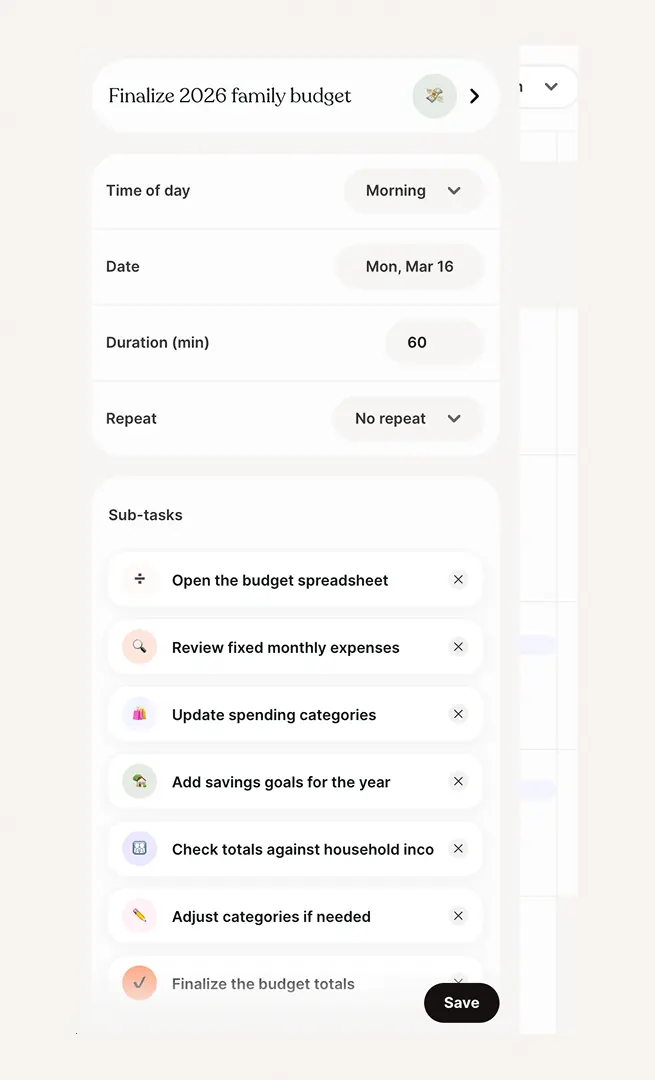
Microtasking changes how we get started. Instead of treating a project as one large task, microtasking breaks the work into smaller, clearly defined actions that can be completed independently. Rather than writing something broad like “Finalize 2026 family budget” on your to-do list, the task becomes a sequence of concrete steps: open the budget spreadsheet, review fixed expenses, update spending categories, and finalize the totals. Each step creates a clear entry point, so you can move through it one step at a time.
When a task feels too large or too vague, the brain often tries to process the entire project at once. You may know exactly what needs to happen, but there are too many steps to organize or too much uncertainty about where to begin. As that mental load builds, momentum can stall before any action happens, a state many people describe as ADHD paralysis.
Microtasks reduce that pressure by shrinking the scope of what your brain has to deal with right now. Instead of confronting the whole project, the task becomes one concrete action, such as opening the email draft, adding a heading to the document, or putting a few dishes in the sink.
To get started on a task, the brain has to decide where to begin, estimate effort, organize the sequence of steps, and shift attention into action. Psychologists refer to this process as task initiation, one of the executive functions that often requires more effort for ADHD brains.
When a task is vague or loosely defined, those decisions have to be made before progress can begin. Microtasks simplify that moment by defining the next action in advance, giving the brain a clear place to start instead of forcing it to figure everything out first.
Large projects often require you to keep several pieces of information active in your mind at the same time. You may be trying to remember the end goal, track what has already been done, figure out the next steps, and hold onto the materials you need while also attempting to act.
Working memory is the system that manages this short-term mental juggling. When it becomes overloaded, tasks can start to feel confusing or difficult to stay oriented within. Microtasks lighten that load because the brain only needs to focus on the next action rather than carry the entire project structure at once.
Motivation in ADHD is closely connected to dopamine, the neurotransmitter involved in reward, interest, and engagement. Tasks that feel repetitive or slow to produce visible results can quickly lose the brain’s attention, even when they are meaningful or important.
Microtasks change the rhythm of the work by creating frequent moments of completion. Each completed step provides a small signal of progress, helping maintain motivation and keeping attention engaged. Instead of spending hours working toward a distant goal, the work unfolds through a series of smaller wins that make forward movement easier to sustain.
Understanding why microtasks work is great and all, but how do you actually break a task down when it still feels big and overwhelming? Here are a few ways to start.
When a task feels overwhelming, the most helpful question is often the simplest one: What is the smallest action that would move this forward right now?
That step is usually much smaller than we initially expect. Instead of “clean the bathroom,” the first action might be putting dirty towels in the laundry bin. Instead of “file taxes,” it might be finding the W-4 you were mailed months ago. Once the first action exists, the next step usually becomes easier to see, because the project is no longer an abstract idea.
Trying to keep an entire project in your head can quickly overload working memory. Writing the steps down allows your brain to focus on doing the task rather than remembering everything that still needs to happen.
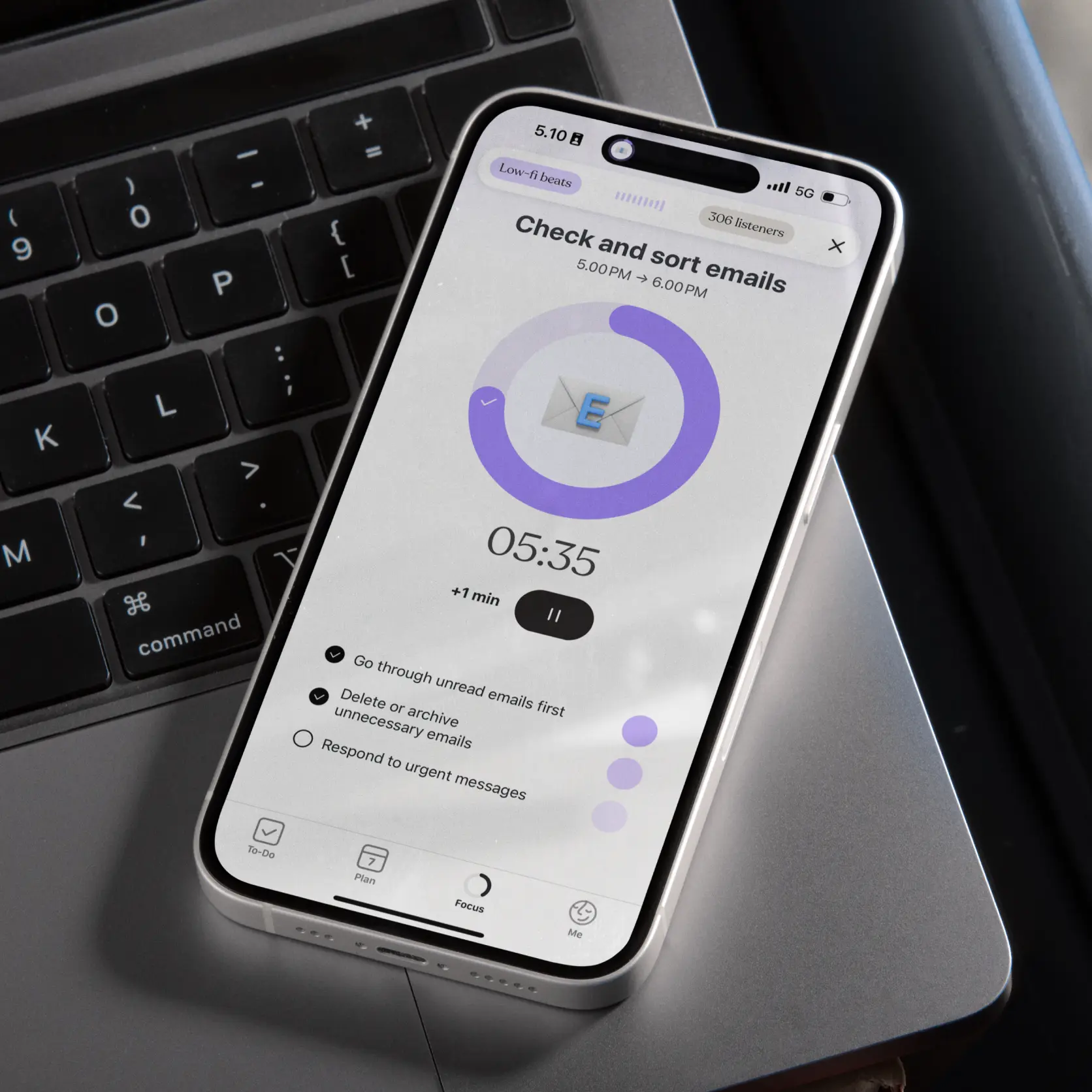
Some people do this with paper lists or simple checklists, while others prefer visual planning tools that keep tasks organized across the day. The important part is that the plan lives outside your head, making it easier to pause, come back, and keep moving forward without having to reconstruct the whole task each time.
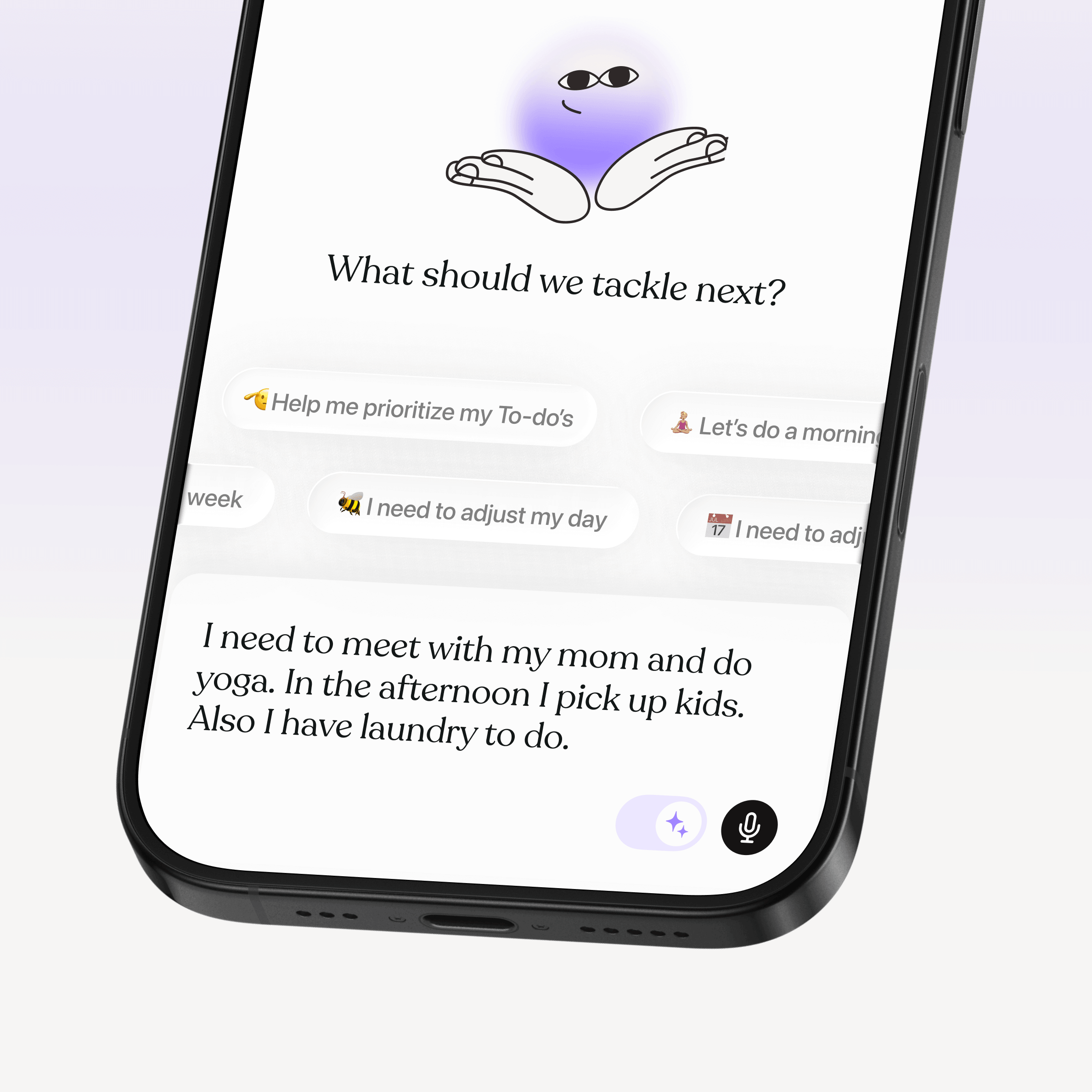
Tools like Tiimo are designed to support both parts of this process: planning your day and breaking down individual tasks. At the day level, Tiimo’s AI Co-Planner helps turn a messy braindump into a structured plan. You can type or speak whatever is on your mind, and the system suggests tasks, adds estimated durations, and organizes them on your timeline so you have a clearer sense of how your day might unfold without having to figure out every detail yourself.
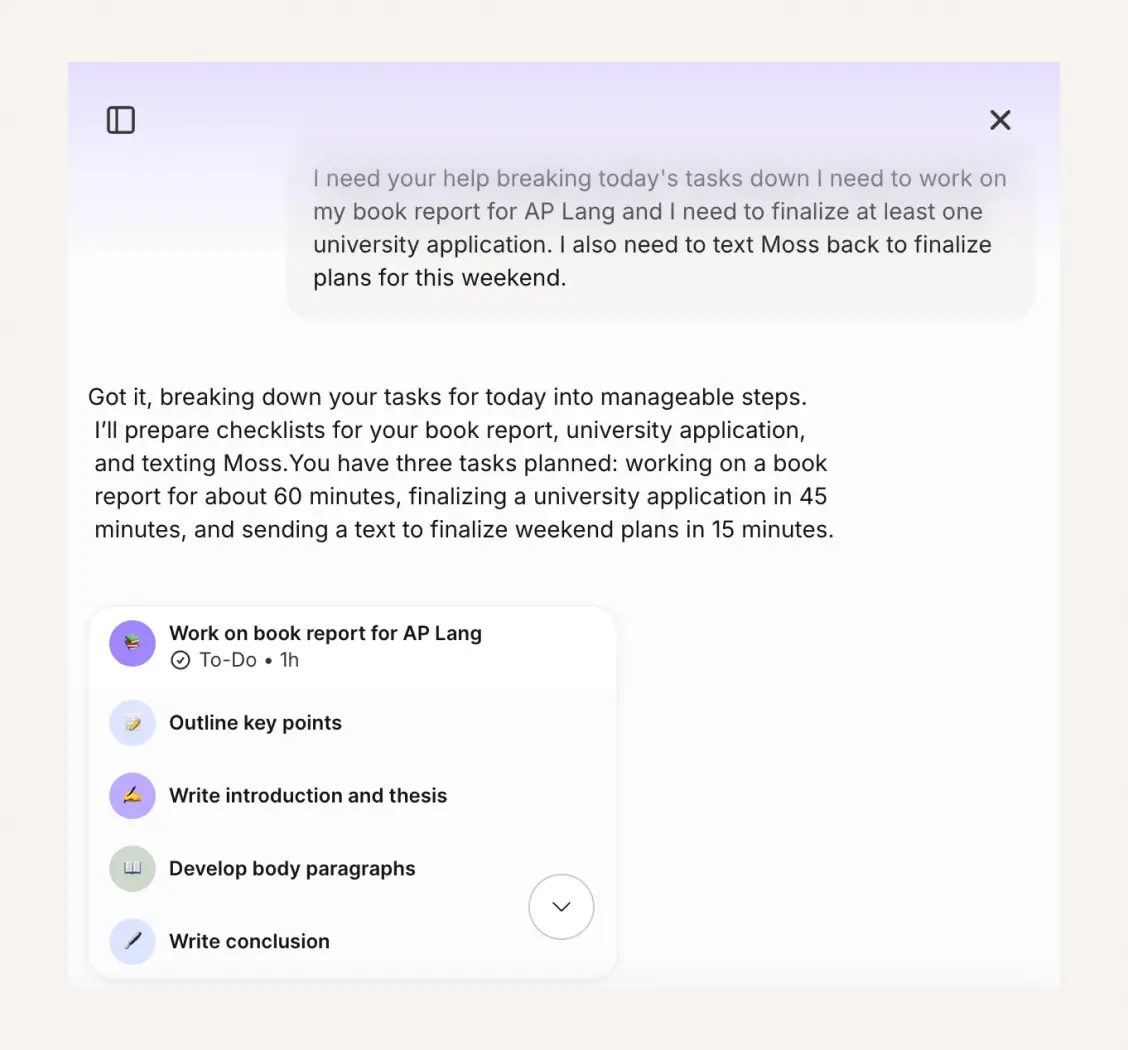
At the task level, Tiimo also makes it easy to break larger tasks into subtasks. Instead of leaving something vague like “clean the apartment” or “work on the report,” you can split it into smaller actions that are easier to start and complete, either by writing them out yourself or using the “Suggest Breakdown” function. Seeing those steps laid out gives you a clear place to start, and the built-in time estimates can be especially helpful for people with time agnosia, since they provide a more realistic sense of how long something might actually take.
For many ADHD brains, the hardest part of a task is not the work itself but figuring out how to begin. Large or vague tasks can create a level of mental coordination that makes starting feel overwhelming, especially when executive functions like planning, sequencing, and working memory are already under strain.
Microtasks change that dynamic by breaking work into smaller, clearly defined actions. When the next step is concrete and manageable, the brain no longer has to organize the entire project before taking action. That smaller entry point reduces overwhelm, lowers the barrier to task initiation, lightens the load on working memory, and creates more frequent moments of visible progress that help sustain attention and motivation.
Instead of trying to tackle everything at once, the focus shifts to the next small action that moves the task forward. Over time, those small steps accumulate into meaningful progress. Tools like Tiimo can support this process by helping turn messy thoughts into structured plans and by breaking larger tasks into manageable subtasks, making it easier to move from feeling stuck to taking the first step.
Arnsten, Amy F. T., and John T. Walkup. “Neurobiology of Attention-Deficit/Hyperactivity Disorder: The Role of the Prefrontal Cortex.” Biological Psychiatry, vol. 93, no. 2, 2023, pp. 153–161.
Coghill, David, and Tobias Banaschewski. “New Developments in the Management of Attention-Deficit/Hyperactivity Disorder.” The Lancet Child & Adolescent Health, vol. 7, no. 2, 2023, pp. 92–104.
Diamond, Adele. “Executive Functions.” Annual Review of Psychology, vol. 74, 2023, pp. 1–29.
Faraone, Stephen V., et al. “The World Federation of ADHD International Consensus Statement: 208 Evidence-Based Conclusions About the Disorder.” Neuroscience & Biobehavioral Reviews, vol. 128, 2021, pp. 789–818.

Microtasks turn overwhelming tasks into small, clear steps that make starting easier. Learn why they work so well for ADHD brains and how to use them in daily planning.
If you’re an ADHD’er, you probably know the feeling of opening your to-do list, seeing something that should theoretically take ten minutes, and somehow feeling completely unable to begin. The document is already open on your computer, the laundry basket is sitting nearby (and you’re out of clean socks), and the message you meant to send hours ago is still unsent. None of these tasks are particularly complex, and many of them could realistically be finished in just a few minutes, yet getting started can feel almost impossible.
Later in the day, though, something interesting often happens. Without much ceremony, a piece of that same task suddenly gets done. You reply to part of that message while waiting for a friend to arrive, jot down the first few ideas for a project during a train ride, or finally begin sorting the reading for a class while pasta cooks on the stove. The task that felt immovable earlier begins to move once you break it down into smaller pieces.
And yet, the task itself has not changed. Replying to the message, sorting the reading, or starting the essay still requires the same work, but when the first step becomes small and concrete, it suddenly becomes much easier to begin.
Microtasking changes how we get started. Instead of treating a project as one large task, microtasking breaks the work into smaller, clearly defined actions that can be completed independently. Rather than writing something broad like “Finalize 2026 family budget” on your to-do list, the task becomes a sequence of concrete steps: open the budget spreadsheet, review fixed expenses, update spending categories, and finalize the totals. Each step creates a clear entry point, so you can move through it one step at a time.
When a task feels too large or too vague, the brain often tries to process the entire project at once. You may know exactly what needs to happen, but there are too many steps to organize or too much uncertainty about where to begin. As that mental load builds, momentum can stall before any action happens, a state many people describe as ADHD paralysis.
Microtasks reduce that pressure by shrinking the scope of what your brain has to deal with right now. Instead of confronting the whole project, the task becomes one concrete action, such as opening the email draft, adding a heading to the document, or putting a few dishes in the sink.
To get started on a task, the brain has to decide where to begin, estimate effort, organize the sequence of steps, and shift attention into action. Psychologists refer to this process as task initiation, one of the executive functions that often requires more effort for ADHD brains.
When a task is vague or loosely defined, those decisions have to be made before progress can begin. Microtasks simplify that moment by defining the next action in advance, giving the brain a clear place to start instead of forcing it to figure everything out first.
Large projects often require you to keep several pieces of information active in your mind at the same time. You may be trying to remember the end goal, track what has already been done, figure out the next steps, and hold onto the materials you need while also attempting to act.
Working memory is the system that manages this short-term mental juggling. When it becomes overloaded, tasks can start to feel confusing or difficult to stay oriented within. Microtasks lighten that load because the brain only needs to focus on the next action rather than carry the entire project structure at once.
Motivation in ADHD is closely connected to dopamine, the neurotransmitter involved in reward, interest, and engagement. Tasks that feel repetitive or slow to produce visible results can quickly lose the brain’s attention, even when they are meaningful or important.
Microtasks change the rhythm of the work by creating frequent moments of completion. Each completed step provides a small signal of progress, helping maintain motivation and keeping attention engaged. Instead of spending hours working toward a distant goal, the work unfolds through a series of smaller wins that make forward movement easier to sustain.
Understanding why microtasks work is great and all, but how do you actually break a task down when it still feels big and overwhelming? Here are a few ways to start.
When a task feels overwhelming, the most helpful question is often the simplest one: What is the smallest action that would move this forward right now?
That step is usually much smaller than we initially expect. Instead of “clean the bathroom,” the first action might be putting dirty towels in the laundry bin. Instead of “file taxes,” it might be finding the W-4 you were mailed months ago. Once the first action exists, the next step usually becomes easier to see, because the project is no longer an abstract idea.
Trying to keep an entire project in your head can quickly overload working memory. Writing the steps down allows your brain to focus on doing the task rather than remembering everything that still needs to happen.
Some people do this with paper lists or simple checklists, while others prefer visual planning tools that keep tasks organized across the day. The important part is that the plan lives outside your head, making it easier to pause, come back, and keep moving forward without having to reconstruct the whole task each time.
Tools like Tiimo are designed to support both parts of this process: planning your day and breaking down individual tasks. At the day level, Tiimo’s AI Co-Planner helps turn a messy braindump into a structured plan. You can type or speak whatever is on your mind, and the system suggests tasks, adds estimated durations, and organizes them on your timeline so you have a clearer sense of how your day might unfold without having to figure out every detail yourself.
At the task level, Tiimo also makes it easy to break larger tasks into subtasks. Instead of leaving something vague like “clean the apartment” or “work on the report,” you can split it into smaller actions that are easier to start and complete, either by writing them out yourself or using the “Suggest Breakdown” function. Seeing those steps laid out gives you a clear place to start, and the built-in time estimates can be especially helpful for people with time agnosia, since they provide a more realistic sense of how long something might actually take.
For many ADHD brains, the hardest part of a task is not the work itself but figuring out how to begin. Large or vague tasks can create a level of mental coordination that makes starting feel overwhelming, especially when executive functions like planning, sequencing, and working memory are already under strain.
Microtasks change that dynamic by breaking work into smaller, clearly defined actions. When the next step is concrete and manageable, the brain no longer has to organize the entire project before taking action. That smaller entry point reduces overwhelm, lowers the barrier to task initiation, lightens the load on working memory, and creates more frequent moments of visible progress that help sustain attention and motivation.
Instead of trying to tackle everything at once, the focus shifts to the next small action that moves the task forward. Over time, those small steps accumulate into meaningful progress. Tools like Tiimo can support this process by helping turn messy thoughts into structured plans and by breaking larger tasks into manageable subtasks, making it easier to move from feeling stuck to taking the first step.
Arnsten, Amy F. T., and John T. Walkup. “Neurobiology of Attention-Deficit/Hyperactivity Disorder: The Role of the Prefrontal Cortex.” Biological Psychiatry, vol. 93, no. 2, 2023, pp. 153–161.
Coghill, David, and Tobias Banaschewski. “New Developments in the Management of Attention-Deficit/Hyperactivity Disorder.” The Lancet Child & Adolescent Health, vol. 7, no. 2, 2023, pp. 92–104.
Diamond, Adele. “Executive Functions.” Annual Review of Psychology, vol. 74, 2023, pp. 1–29.
Faraone, Stephen V., et al. “The World Federation of ADHD International Consensus Statement: 208 Evidence-Based Conclusions About the Disorder.” Neuroscience & Biobehavioral Reviews, vol. 128, 2021, pp. 789–818.
Microtasks turn overwhelming tasks into small, clear steps that make starting easier. Learn why they work so well for ADHD brains and how to use them in daily planning.


If you’re an ADHD’er, you probably know the feeling of opening your to-do list, seeing something that should theoretically take ten minutes, and somehow feeling completely unable to begin. The document is already open on your computer, the laundry basket is sitting nearby (and you’re out of clean socks), and the message you meant to send hours ago is still unsent. None of these tasks are particularly complex, and many of them could realistically be finished in just a few minutes, yet getting started can feel almost impossible.
Later in the day, though, something interesting often happens. Without much ceremony, a piece of that same task suddenly gets done. You reply to part of that message while waiting for a friend to arrive, jot down the first few ideas for a project during a train ride, or finally begin sorting the reading for a class while pasta cooks on the stove. The task that felt immovable earlier begins to move once you break it down into smaller pieces.
And yet, the task itself has not changed. Replying to the message, sorting the reading, or starting the essay still requires the same work, but when the first step becomes small and concrete, it suddenly becomes much easier to begin.
Microtasking changes how we get started. Instead of treating a project as one large task, microtasking breaks the work into smaller, clearly defined actions that can be completed independently. Rather than writing something broad like “Finalize 2026 family budget” on your to-do list, the task becomes a sequence of concrete steps: open the budget spreadsheet, review fixed expenses, update spending categories, and finalize the totals. Each step creates a clear entry point, so you can move through it one step at a time.
When a task feels too large or too vague, the brain often tries to process the entire project at once. You may know exactly what needs to happen, but there are too many steps to organize or too much uncertainty about where to begin. As that mental load builds, momentum can stall before any action happens, a state many people describe as ADHD paralysis.
Microtasks reduce that pressure by shrinking the scope of what your brain has to deal with right now. Instead of confronting the whole project, the task becomes one concrete action, such as opening the email draft, adding a heading to the document, or putting a few dishes in the sink.
To get started on a task, the brain has to decide where to begin, estimate effort, organize the sequence of steps, and shift attention into action. Psychologists refer to this process as task initiation, one of the executive functions that often requires more effort for ADHD brains.
When a task is vague or loosely defined, those decisions have to be made before progress can begin. Microtasks simplify that moment by defining the next action in advance, giving the brain a clear place to start instead of forcing it to figure everything out first.
Large projects often require you to keep several pieces of information active in your mind at the same time. You may be trying to remember the end goal, track what has already been done, figure out the next steps, and hold onto the materials you need while also attempting to act.
Working memory is the system that manages this short-term mental juggling. When it becomes overloaded, tasks can start to feel confusing or difficult to stay oriented within. Microtasks lighten that load because the brain only needs to focus on the next action rather than carry the entire project structure at once.
Motivation in ADHD is closely connected to dopamine, the neurotransmitter involved in reward, interest, and engagement. Tasks that feel repetitive or slow to produce visible results can quickly lose the brain’s attention, even when they are meaningful or important.
Microtasks change the rhythm of the work by creating frequent moments of completion. Each completed step provides a small signal of progress, helping maintain motivation and keeping attention engaged. Instead of spending hours working toward a distant goal, the work unfolds through a series of smaller wins that make forward movement easier to sustain.
Understanding why microtasks work is great and all, but how do you actually break a task down when it still feels big and overwhelming? Here are a few ways to start.
When a task feels overwhelming, the most helpful question is often the simplest one: What is the smallest action that would move this forward right now?
That step is usually much smaller than we initially expect. Instead of “clean the bathroom,” the first action might be putting dirty towels in the laundry bin. Instead of “file taxes,” it might be finding the W-4 you were mailed months ago. Once the first action exists, the next step usually becomes easier to see, because the project is no longer an abstract idea.
Trying to keep an entire project in your head can quickly overload working memory. Writing the steps down allows your brain to focus on doing the task rather than remembering everything that still needs to happen.
Some people do this with paper lists or simple checklists, while others prefer visual planning tools that keep tasks organized across the day. The important part is that the plan lives outside your head, making it easier to pause, come back, and keep moving forward without having to reconstruct the whole task each time.
Tools like Tiimo are designed to support both parts of this process: planning your day and breaking down individual tasks. At the day level, Tiimo’s AI Co-Planner helps turn a messy braindump into a structured plan. You can type or speak whatever is on your mind, and the system suggests tasks, adds estimated durations, and organizes them on your timeline so you have a clearer sense of how your day might unfold without having to figure out every detail yourself.
At the task level, Tiimo also makes it easy to break larger tasks into subtasks. Instead of leaving something vague like “clean the apartment” or “work on the report,” you can split it into smaller actions that are easier to start and complete, either by writing them out yourself or using the “Suggest Breakdown” function. Seeing those steps laid out gives you a clear place to start, and the built-in time estimates can be especially helpful for people with time agnosia, since they provide a more realistic sense of how long something might actually take.
For many ADHD brains, the hardest part of a task is not the work itself but figuring out how to begin. Large or vague tasks can create a level of mental coordination that makes starting feel overwhelming, especially when executive functions like planning, sequencing, and working memory are already under strain.
Microtasks change that dynamic by breaking work into smaller, clearly defined actions. When the next step is concrete and manageable, the brain no longer has to organize the entire project before taking action. That smaller entry point reduces overwhelm, lowers the barrier to task initiation, lightens the load on working memory, and creates more frequent moments of visible progress that help sustain attention and motivation.
Instead of trying to tackle everything at once, the focus shifts to the next small action that moves the task forward. Over time, those small steps accumulate into meaningful progress. Tools like Tiimo can support this process by helping turn messy thoughts into structured plans and by breaking larger tasks into manageable subtasks, making it easier to move from feeling stuck to taking the first step.
Arnsten, Amy F. T., and John T. Walkup. “Neurobiology of Attention-Deficit/Hyperactivity Disorder: The Role of the Prefrontal Cortex.” Biological Psychiatry, vol. 93, no. 2, 2023, pp. 153–161.
Coghill, David, and Tobias Banaschewski. “New Developments in the Management of Attention-Deficit/Hyperactivity Disorder.” The Lancet Child & Adolescent Health, vol. 7, no. 2, 2023, pp. 92–104.
Diamond, Adele. “Executive Functions.” Annual Review of Psychology, vol. 74, 2023, pp. 1–29.
Faraone, Stephen V., et al. “The World Federation of ADHD International Consensus Statement: 208 Evidence-Based Conclusions About the Disorder.” Neuroscience & Biobehavioral Reviews, vol. 128, 2021, pp. 789–818.
When you're ready, try Tiimo and make structure a little easier.

Five ADHD-friendly organization tips that reduce clutter and simplify cleaning.
Why some ADHD'ers are diagnosed later in life and where to find support.
You’ve got plenty of energy, so why can’t you use it on the task that matters? Learn what blocks ADHD motivation and how to make difficult tasks easier to start.
